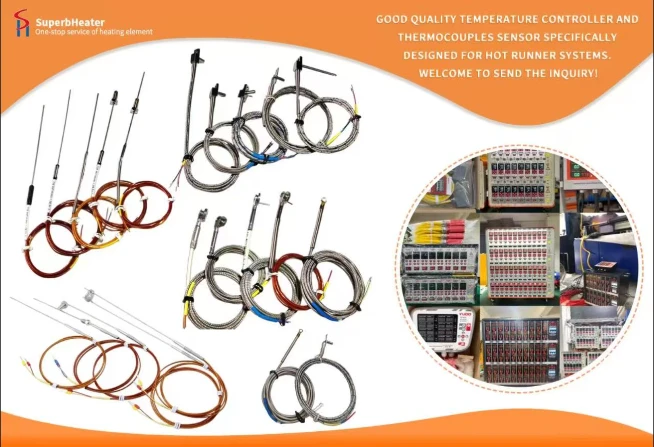
Production line efficiency depends on uptime, cycle speed, scrap rate, changeover speed, and labor requirements. Thermocouples operate behind the scenes but affect every one of these factors. Poor thermocouple performance silently reduces line efficiency, while high-quality sensors improve overall output and profitability.
Stable thermocouples reduce unplanned downtime caused by temperature-related failures, heater burnout, nozzle blockages, and material leaks. Reliable sensing keeps lines running continuously.
Faster cycle times are supported by quick-response thermocouples that maintain stability at high speeds. Slow or unstable sensors limit maximum production speed.
Low scrap rates from consistent temperature control reduce material waste and avoid rework. Every defective part reduces line efficiency.
Fast material and color changes enabled by accurate thermocouples reduce transition time, allowing more production hours per day.
Reduced operator intervention means labor can focus on value-added tasks rather than constant troubleshooting. Stable thermocouples minimize manual adjustments.
Extended component life reduces maintenance stops and replacement delays. Heaters, nozzles, and manifolds last longer with stable thermal control.
Process data from reliable thermocouples supports line optimization, allowing engineers to identify bottlenecks and improve throughput.
In modern high-speed production lines, even small improvements in stability translate to large gains in annual output. Thermocouples are therefore central to maximizing the overall efficiency of injection molding operations.