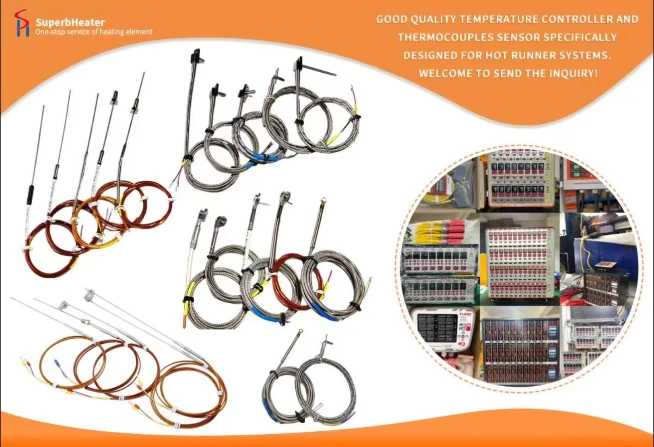
Thermocouples are small components, but their proper handling requires specific knowledge and skills. A well-trained maintenance team can prevent most thermocouple-related issues through correct installation, inspection, and troubleshooting. This article outlines how to build an effective thermocouple training program.
Training Objectives. Define clear learning objectives: (1) Understand thermocouple types and their applications. (2) Select the correct thermocouple for each zone. (3) Install thermocouples correctly and safely. (4) Perform inspections and tests. (5) Troubleshoot common issues. (6) Document maintenance activities. These objectives guide the curriculum.
Basic Theory Module. Cover the fundamentals: what a thermocouple is, how it works (Seebeck effect), the difference between K-type and J-type, the importance of cold-junction compensation, and the meaning of accuracy classes (Class 1 vs. Class 2). Use simple analogies and visual aids-a thermocouple generates a tiny voltage; the controller amplifies it and converts it to a temperature.
Identification and Selection Module. Train technicians to read thermocouple markings and color codes. Provide samples of different types, sheath materials, and connector styles. Teach them how to match thermocouple type to controller settings. Include a practical exercise: given a mold drawing and controller specification, select the correct replacement thermocouple.
Installation Module. This is the most critical hands-on module. Cover: safety procedures (power-off, cooling, LOTO), proper insertion technique (along the bore axis, no twisting), torque specifications, thermal grease application, cable routing and strain relief, and bending techniques (gradual curves, no repeated bending). Have trainees practice on a training fixture with a dummy manifold.
Testing and Inspection Module. Teach the use of multimeters (resistance measurement) and megohmmeters (insulation resistance). Show how to perform a visual inspection-what to look for (discoloration, pitting, cracks). Demonstrate how to validate a thermocouple with a reference probe. Provide a checklist for routine inspections.
Troubleshooting Module. Cover common faults: open circuit, short circuit, reversed polarity, drift, and noise. For each fault, explain the symptoms, probable causes, and corrective actions. Use case studies from your plant-real examples resonate more than generic scenarios. Include a troubleshooting flowchart that guides technicians from symptom to solution.
Documentation Module. Teach the importance of record keeping: installation date, serial number, resistance baseline, calibration history, and replacement date. Show how to fill out maintenance logs and update mold documentation. Emphasize that good documentation prevents future errors and supports predictive maintenance.
Safety Module. Cover electrical safety (LOTO, voltage verification), thermal safety (burns from hot components), and chemical safety (corrosive resin gases). Include first aid procedures for burns and electrical shock. Make safety the first and last topic of every session.
Hands-On Practice. Theory alone is insufficient. Provide ample hands-on practice: installing thermocouples in a training mold, performing resistance tests, troubleshooting simulated faults, and documenting the work. Pair trainees with experienced mentors for on-the-job training. Schedule refresher sessions annually.
Assessment. Test trainees with both written exams and practical demonstrations. A written exam covers theory and identification; a practical exam requires installing a thermocouple, performing tests, and documenting the work. Certify technicians who pass both. Re-certify every 2 years.
Continuous Improvement. Solicit feedback from trainees-what was unclear? What additional topics would help? Update the training program based on feedback and on emerging issues in your plant. Share lessons learned from thermocouple failures as training cases.
Training Materials. Create a training manual with: thermocouple types and color codes, installation procedures, inspection checklists, troubleshooting guides, and documentation forms. Include photos and diagrams. Make the manual available on the plant floor for quick reference.
Case Study: Training Impact. A plant implemented a comprehensive thermocouple training program after experiencing frequent failures. Within 6 months, thermocouple-related downtime dropped by 60%, and average sensor life increased by 40%. The training investment paid back in less than 3 months through reduced emergency replacements and improved production stability.