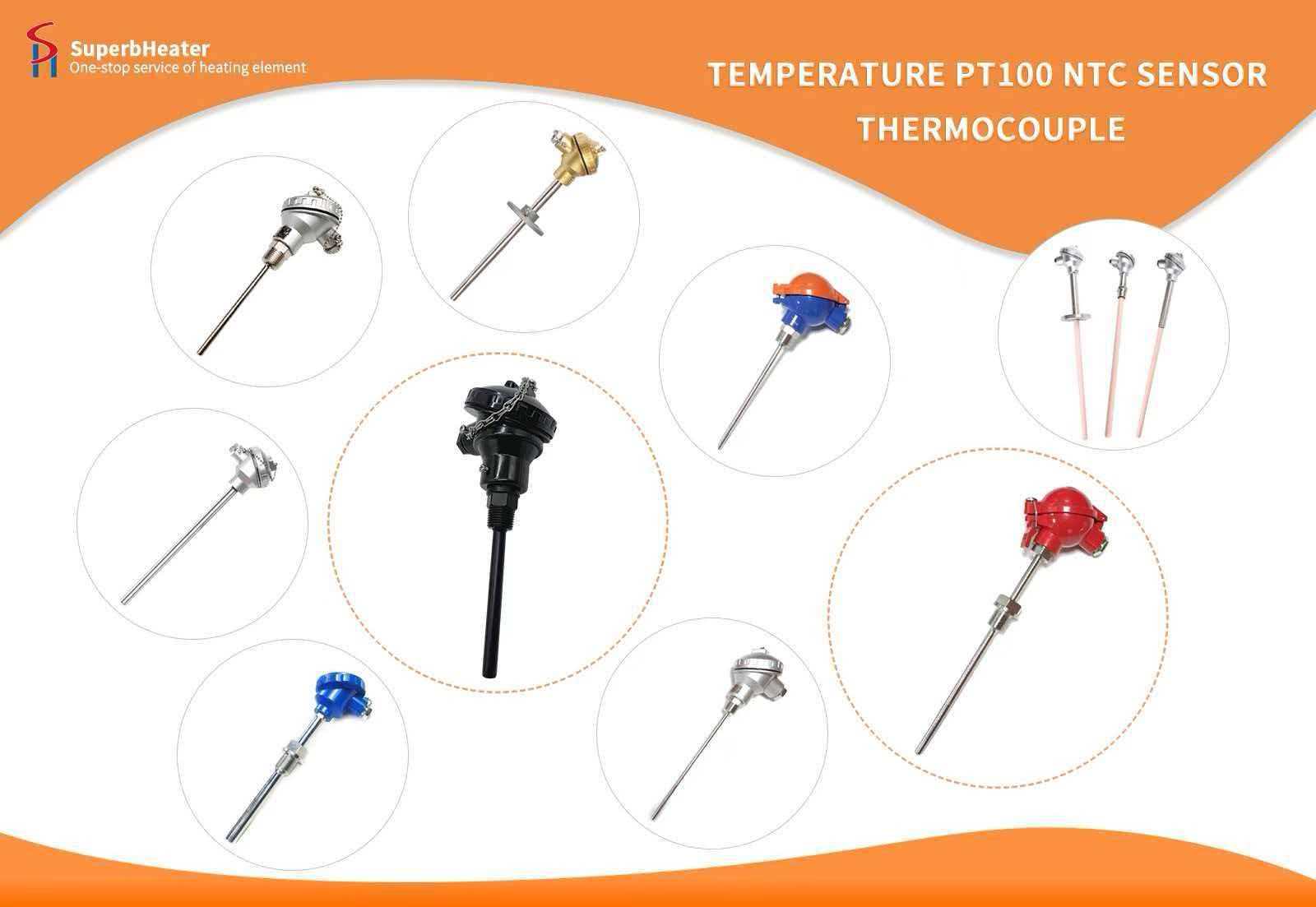
In the field of industrial temperature measurement, metal tube probe-type platinum resistance thermometers with junction boxes and movable threaded mounting probe-type platinum resistance thermometers represent two fundamentally different technological approaches, with significant differences in their design philosophy, material selection, and application scenarios. Understanding these differences is crucial to avoiding selection errors and ensuring the reliability of the measurement system.
I. Structural Essence: Modular and Maintainable vs. Integrated and Rapid Deployment
The core of the metal tube probe-type with junction box lies in its modular maintainability. Its structure consists of three parts: a metal protective tube (usually 316L stainless steel or Inconel 625), an internal high-purity magnesium oxide (MgO) insulation layer, and a separate junction box module. The junction box connects to the probe via threads or clips, forming a separable electrical interface. This design offers two major advantages:
Online replacement capability: When the sensor ages or the lead wires are damaged, only the probe needs to be unscrewed and replaced with a spare part; the junction box and cable can be reused. This design keeps the mean time to repair (MTTR) within 15 minutes, significantly reducing downtime losses in continuous production systems.
Electrical isolation: The junction box separates the high-temperature area from the control room, preventing thermal radiation from damaging the instrument, and simultaneously achieves a Faraday cage effect through grounding bolts, shielding against electromagnetic interference.
The movable threaded mounting probe-type, on the other hand, adopts an integrated rapid deployment design, where the metal protective tube and the threaded interface are directly welded or mechanically connected, forming a non-removable integral structure. The threaded connection is typically M20×1.5 or 1/4" NPT standard, sealed with a metal gasket. This design provides excellent mechanical stability, making it suitable for high-pressure, high-flow, or high-vibration environments, but requires complete replacement during maintenance, as localized repair is not possible.
II. Performance Boundaries: The Extreme Challenges of Temperature and Pressure
In terms of temperature resistance, metal tube type sensors have a significant advantage:
Long-term operating temperature can reach 850℃, and can withstand over 1000℃ for short periods, suitable for extreme thermal environments such as power plant boilers and cracking furnaces.
The operating temperature range of the movable threaded type is usually -50℃ to 850℃, but the threaded sealing material (such as graphite gaskets) may age at high temperatures and requires regular replacement.
In terms of pressure resistance, the movable threaded type leads:
It can withstand high pressures of 10–20 MPa, suitable for high-pressure environments such as steam pipelines and reactors.
The pressure resistance of the threaded connection of the metal tube type is weaker, usually ≤6.0 MPa, and ≤4.0 MPa when using a flange connection with a PTFE gasket.
In terms of mechanical shock resistance, the movable threaded type, through the rigid connection of the thread and the pipe, can withstand high-speed fluid scouring and mechanical vibration of 5–10 m/s; while the metal tube type relies on the strength of the protective tube itself, and its impact resistance is relatively weaker.
III. Application Scenarios: Heavy Industry vs. Chemical and Energy
The metal tube probe with junction box is the exclusive choice for heavy industry, suitable for:
Boiler heating surfaces and turbine cylinders in power plants, requiring resistance to 850℃ high temperature and 10 MPa steam pressure.
Cracking furnaces and hydrogenation reactors in the petrochemical industry, requiring resistance to highly corrosive media and mechanical vibration.
Cooling systems in nuclear power plants, requiring long-term reliability in extreme environments.
The movable threaded mounting type probe is more suitable for high-pressure scenarios in the chemical and energy industries:
Distillation columns and high-pressure reactors in the chemical industry, requiring resistance to 10–20 MPa. Pressure in MPa and highly corrosive media.
Steam pipelines and heat exchangers in the energy industry require long-term stable operation under high temperature and high pressure.
IV. Selection Principles: Maintenance Convenience vs. Structural Strength
Metal Tube Probe with Junction Box: When you are faced with high temperature, high pressure, high flow rate, and strong vibration environments, and maintenance convenience is a priority, this is the only guarantee.
Movable Threaded Mounting Probe: When you need extremely high structural strength and sealing, and the maintenance frequency is low, this is a better choice.
V. Maintenance Logic: Repairable Assets vs. Disposable Consumables
The core value of the metal tube type lies in its maintainability:
The separate design of the junction box and probe allows for partial replacement, reducing long-term operation and maintenance costs.
The independent grounding and shielding design of the junction box ensures signal stability.
The movable threaded type tends towards single-use:
Overall replacement leads to accumulating operation and maintenance costs.
Threaded seals require regular inspection to prevent leaks.
VI. Summary: The Ultimate Trade-off of Engineering Value
Both meet the IEC 60751 Pt100 accuracy standard, but the structure defines the functional boundaries:
The metal tube type is the "maintainable fortress" of heavy industry, resisting extreme environments with its modular design.
The movable threaded type is the "high-pressure guardian" of the chemical and energy industries, achieving long-term sealing with its integrated design.
Choosing the wrong model can be costly: using a movable threaded type in high-temperature steam pipelines will lead to extended downtime due to inconvenient maintenance; using a metal tube type in a chemical high-pressure reactor will cause leakage accidents due to insufficient sealing. Understanding the underlying logic is key to achieving maximum reliability at minimum cost.
VII. Application Case Comparison
Metal Tube Type Case: Temperature measurement of a boiler superheater in a thermal power plant, using a metal tube probe with a junction box. It operates stably at 850℃ and 10 MPa steam pressure. During maintenance, only the probe needs to be replaced, reducing system downtime to 15 minutes.
Movable Threaded Type Case: Temperature measurement of a distillation column in a chemical company, using a movable threaded mounting probe, at 20... It provides long-term sealing in high-pressure (MPa) and highly corrosive environments, but the sensor needs to be replaced every two years.