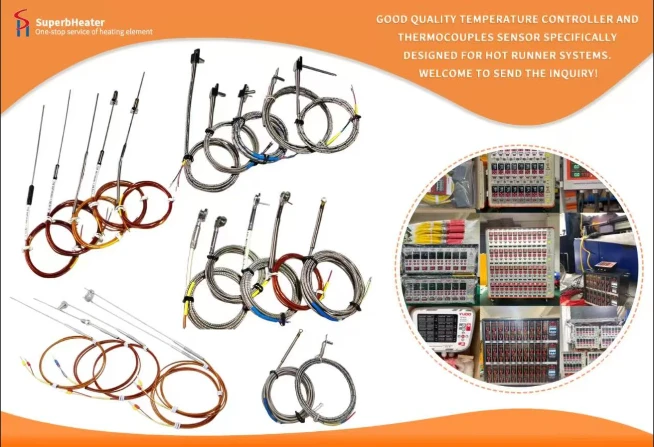
High-vibration injection molding environments-typical of high-speed thin-wall molding, automotive parts, and multi-component molding-create significant challenges for stable thermocouple signal transmission. Vibrations can cause intermittent contact, cable stress, and false sensor signals. Effective vibration management is essential for reliable temperature control.
Sources of Vibration. Injection molding machines generate vibration from multiple sources: hydraulic pump pulsations, screw rotation, mold opening/closing impacts, and ejector pin actuation. High-speed machines produce high-frequency vibrations that can exceed 200 Hz. Vibration amplitudes at the mold can reach 5–10 g (where g = 9.8 m/s²).
Signal Degradation Mechanisms. Vibration-induced issues include: micro-motion at connector pins causing intermittent contact; fatigue fractures of the thermocouple alloy wires; fretting corrosion at the probe-bore interface; and induced electrical noise from moving cables in magnetic fields. Each mechanism can cause erratic temperature readings or sudden failures.
Shielding and Connection Integrity. Use crimped connections instead of soldered ones-crimps are more resistant to vibration fatigue. Ensure connectors have positive locking mechanisms (screw-type or bayonet, not push-fit). Secure cables with strain relief clamps every 10–20 cm to prevent cable whip from transmitting vibration to the connector.
Cable Selection for Flex. In automated cells with moving molds, use continuous-flex thermocouple cables with stranded conductors-these are designed to withstand millions of flex cycles. Solid conductor cables have a limited flex life and may fracture under vibration. For applications requiring extreme flexibility, use ultra-fine stranded copper alloy wires.
Installation Best Practices. Route cables to avoid direct contact with vibrating components. Use flexible conduit over cables in high-vibration zones. Apply a thread-locking compound to all compression fittings and connectors. For the probe itself, choose a shorter, stiffer design where possible to raise its natural frequency above the vibration spectrum.
Case Study: High-Speed Automotive Molding. An automotive plant molding connectors at 300 mm/s injection speed experienced thermocouple failures every 2 months. Vibration analysis revealed resonance at 80 Hz. Switching to a shorter, thicker probe with a locking connector extended life to 14 months.
---