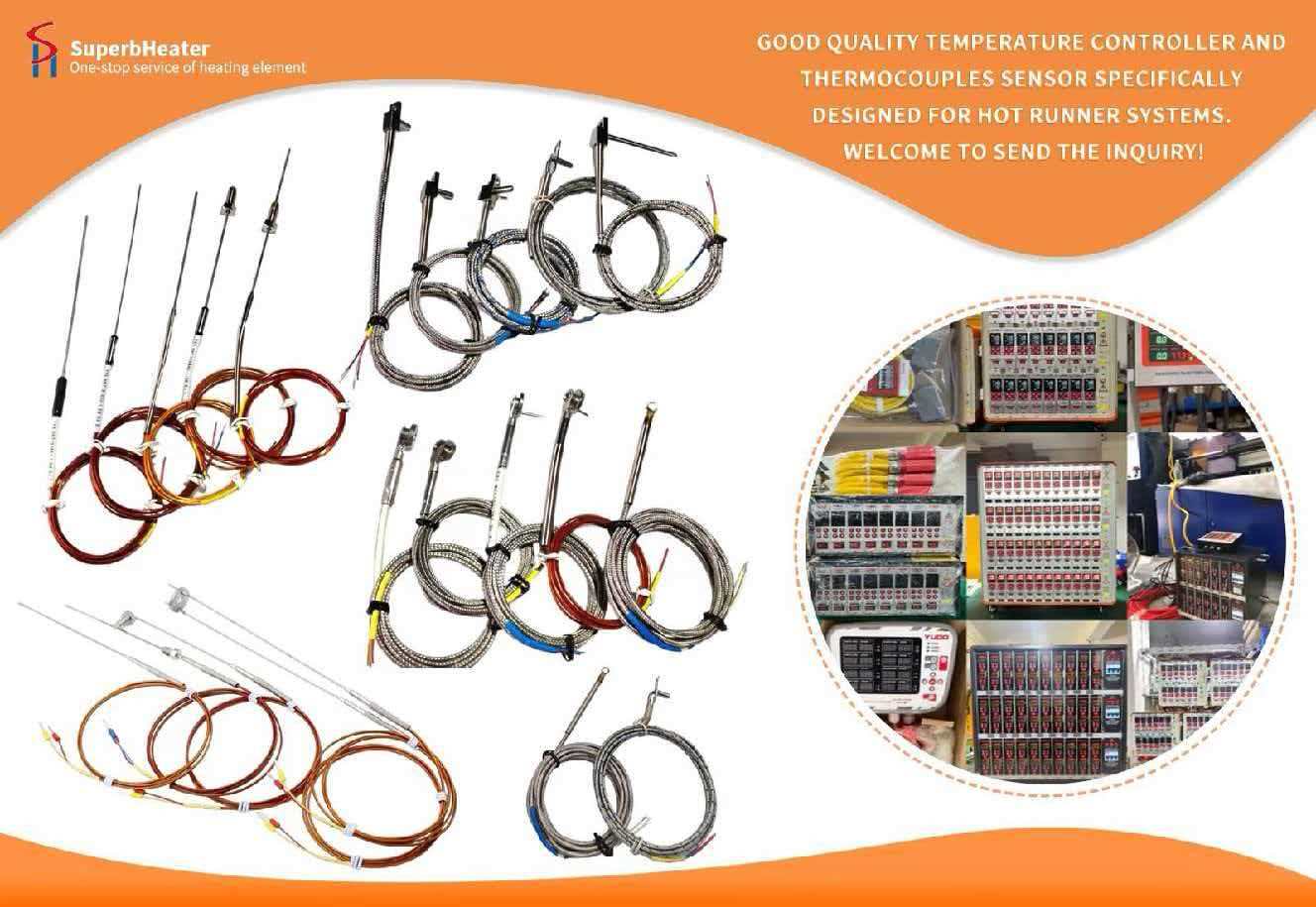
I. Optimisation and Locking of Hot Runner Temperature Control Parameters: Establish a safety threshold of ±2℃ for the nozzle temperature that corresponds to the repaired slow-filling cavity. Set the reference temperature of this nozzle 2-3℃ higher than other nozzles of the same specification within the material's allowable processing temperature range to provide temperature redundancy and offset slight temperature drift that may occur during long-term production.
To prevent a gradual increase in flow resistance that could result in filling latency, synchronise the increase of the temperature of the corresponding zone on the manifold by 1-2℃. This will ensure that the melt in this branch maintains a stable low viscosity throughout the process..
The injection moulding machine system is designed to prevent accidental disruption of temperature balance by locking all temperature control parameters to prevent unauthorised personnel from modifying them.
II. Optimisation of Injection Speed and Pressure Parameters: In the filling range that corresponds to this cavity, increase the injection speed reference value by 5%-10% and establish upper and lower limit protection for the injection speed to prevent unexpected decreases in injection speed during subsequent production, which could result in a decrease in filling speed.
To ensure that the melt driving force is consistently sufficient, the injection pressure baseline value for this filling section is increased by 8% to 12% to reserve sufficient pressure reserves. This offsets the increased flow resistance caused by minor carbon buildup in the runner.
The need for repeated re-adjustment is eliminated by the permanent archiving of multi-segment injection speed profiles, which can be directly accessed during each mould change.
III. Dynamic Optimisation of Needle Valve Timing Parameters (Applicable to Needle Valve Hot Runners) The needle valve gate corresponding to this cavity is set to a baseline timing that is 0.05~0.1s earlier than other cavities after repair. This is done to provide timing compensation redundancy to mitigate potential needle valve latency during long-term production.
The timing parameters are fine-tuned to prevent mechanical wear from progressively increasing timing deviations, and the actual opening time of all needle valves is calibrated after every 100,000 mould runs.
IV. Optimisation of Parameter-Linked Early Warning
Configure parameter-linked early warnings in the MES system or injection moulding machine: The system automatically issues an early warning when the filling time of the cavity exceeds 0.03 seconds or the product weight deviation exceeds 1%, allowing for the fine-tuning of parameters and the completion of pre-processing prior to the slow filling failure fully manifesting.
Form a parameter iterative optimisation curve to ensure a balanced filling state in the long term by establishing a dedicated parameter file for this mould and recording the optimal parameter combination for each production run.
This parameter optimisation solution is fully customisable to your precision hot runner multi-cavity mould production line. It has the potential to enhance the stability of mass production by over 90% by reducing the recurrence rate of slow filling failures following its implementation.