High-vibration environments, often found in automotive molding and high-speed packaging, can significantly degrade thermocouple performance and cause premature failure. The first selection criterion is the thermocouple's resistance to mechanical fatigue. The vibration induces cyclic stress on the probe and the internal wires. A thermocouple with a thicker sheath (e.g., 1.5 mm) and a higher-grade mineral insulation (e.g., high-density MgO) has better fatigue resistance. The second criterion is the mounting method. A threaded mount is more resistant to vibration than a slip-fit mount. The threads provide a secure, rigid connection. A spring-loaded design with a high preload force helps to maintain contact despite the vibration. The third criterion is the cable. The cable must be flexible enough to absorb the vibration without transferring it to the thermocouple junction. A cable with a fine-stranded conductor and a flexible jacket (like silicone) is preferred. The cable should be strain-relieved at the connector and at the mold entry. The fourth criterion is the connector. A locking connector (e.g., a bayonet or a screw-type) prevents disconnection due to vibration. The connector should also have a sealed boot to prevent the ingress of dust and moisture. The fifth criterion is the probe design. A probe with a strain-relief element (e.g., a small spring near the connector) absorbs the vibration energy, protecting the junction. The sixth criterion is the shielding. Vibration can cause micro-movements at the connector, which can generate electrical noise (triboelectric noise). A shielded cable reduces the pickup of this noise. The seventh criterion is the installation. In a high-vibration environment, the thermocouple should be installed with a lock washer or a thread-locking compound to prevent it from loosening. The eighth criterion is the maintenance. In high-vibration environments, thermocouples should be inspected more frequently for signs of loosening or fatigue. By selecting thermocouples that are specifically designed for high-vibration environments, molders can significantly extend their service life and ensure reliable temperature measurement, even in the most demanding applications.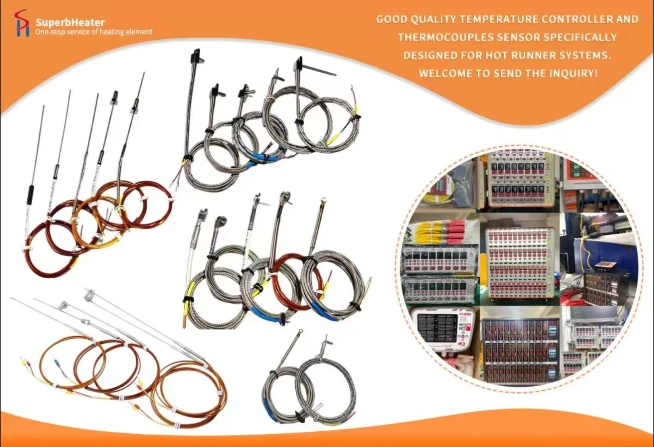

 English
- English
- Français
- Deutsch
- 日本語
- Italiano
- Español
- Português
- русский
- Indonesia
- عربي
- Ελληνικά
- Polski
- فارسی
- עברית
- Kreyòl Ayisyen
- 한국어
- Türkçe
- slovenčina
- Bai Miaowen
- Cymraeg
- dansk
- Lietuvių
- Malti
- Svenska
- Srbija jezik (latinica)
- O'zbek
- ไทย
- suomi
- magyar
- Eesti
- Català
- slovenščina
- Melayu
- Български
- اردو
- România limbi
- bosanski
- हिंदी
- Gaeilgenah Éireann
- Việt Nam
- বাংলা
- íslenska
- Norsk
- Latviešu
- hrvatski
- Nederlands
- Čeština
- українська


