Not all hot runner applications can be served by standard off‑the‑shelf thermocouples. Unique designs, such as very small nozzles, extremely high temperatures, or unusual mounting constraints, often require custom‑made sensors. Specifying a custom thermocouple requires detailed communication between the user and the supplier to ensure the final product meets the exact requirements. Start by documenting the installation geometry: the mounting hole diameter, depth, thread size (if any), and the required overall length of the probe. Also note the distance from the probe shoulder to the sensing tip, the required cable length, and the connector type. Provide a detailed sketch or CAD drawing. Next, specify the thermocouple type (J, K, N, or other). For custom designs, consider whether a high‑temperature alloy, such as Nicrosil‑Nisil (Type N), is better for long‑term stability above 400°C. Then, choose the junction style: grounded (fastest response, but susceptible to ground loops) or ungrounded (insulated, slower but noise‑immune). For a custom design, you can also specify a "double‑junction" sensor with two independent thermocouples in one probe, providing redundancy. The sheath material and diameter are the next parameters: select from stainless steel 304, 316, Inconel 600, Hastelloy, or other alloys based on the resin and temperature. The wall thickness of the sheath affects both durability and response; a thinner wall (0.3 mm) gives faster response but is less robust. The mounting style must also be defined: spring‑loaded, threaded (with a specific thread, e.g., M6x1), or a simple slip fit with a set screw. For spring‑loaded designs, specify the spring force (typically 5–15 N) and the compression range. The cold end (connector area) may require special sealing to prevent resin or moisture ingress; specify the potting material (e.g., high‑temperature epoxy). The cable insulation and jacket material must be compatible with the ambient temperature and potential chemical exposure; options include PVC (up to 105°C), silicone (up to 200°C), fiberglass (up to 400°C), and PTFE (up to 260°C). The connector type should match the existing controller, or you can specify flying leads (bare wires) for custom termination. Finally, provide the required accuracy grade and any special calibration points. Once the specification is drafted, the supplier should provide a drawing for approval. It is advisable to order a small batch for prototype testing. During testing, verify the dimensions, the response time, and the accuracy. Custom thermocouples are often more expensive than standard types, but they can solve unique technical challenges and improve the reliability of non‑standard systems. By providing a complete and accurate specification, you avoid misunderstandings and ensure that the delivered sensor is exactly what your mold requires.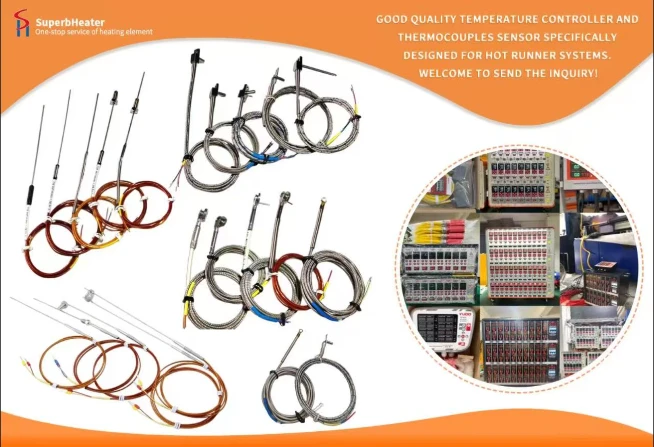

 English
- English
- Français
- Deutsch
- 日本語
- Italiano
- Español
- Português
- русский
- Indonesia
- عربي
- Ελληνικά
- Polski
- فارسی
- עברית
- Kreyòl Ayisyen
- 한국어
- Türkçe
- slovenčina
- Bai Miaowen
- Cymraeg
- dansk
- Lietuvių
- Malti
- Svenska
- Srbija jezik (latinica)
- O'zbek
- ไทย
- suomi
- magyar
- Eesti
- Català
- slovenščina
- Melayu
- Български
- اردو
- România limbi
- bosanski
- हिंदी
- Gaeilgenah Éireann
- Việt Nam
- বাংলা
- íslenska
- Norsk
- Latviešu
- hrvatski
- Nederlands
- Čeština
- українська


