Flow imbalance is a common issue where the melt does not flow equally to all cavities, causing part weight and dimension variations. Thermocouples can provide an indirect detection of flow imbalance. The first sign of a flow imbalance is a temperature difference between the drops. A drop that receives less flow will have a longer residence time, causing the material to degrade and heat up. The thermocouple will read a higher temperature. Conversely, a drop that receives more flow will have a lower temperature (due to the cooling effect of the moving melt). The second sign is a change in the required heater power. A drop with less flow may have a higher temperature, requiring less heater power. A drop with more flow may have a lower temperature, requiring more heater power. The third sign is an unstable temperature. A flow imbalance can cause the melt to surge, leading to temperature fluctuations. The fourth step is to perform a short shot test. A short shot will show the flow length in each cavity. The cavity with the shortest flow length is receiving the least flow. Correlate this with the thermocouple data: the cavity with the shortest flow will likely have the highest temperature. The fifth step is to measure the part weight. The part from the cavity with the least flow will have the lowest weight. The thermocouple data will show a higher temperature for that cavity. The sixth step is to use the thermocouple data to guide the flow balance. If a drop is too hot, reduce the flow to that drop (by adjusting the gate size or the runner diameter). If a drop is too cold, increase the flow. The seventh step is to use a flow balance algorithm. In some advanced hot runner systems, the thermocouple data is used to automatically adjust the heater power in each zone to achieve a uniform temperature, which in turn improves flow balance. The eighth step is to validate the flow balance. After making adjustments, measure the part weight from each cavity. If the weights are consistent, the flow is balanced. The thermocouple data should also show a uniform temperature. By using thermocouple data to detect flow imbalance, molders can correct this issue, achieving consistent part quality across all cavities. This is a powerful, non-invasive diagnostic technique that helps to optimize the hot runner performance.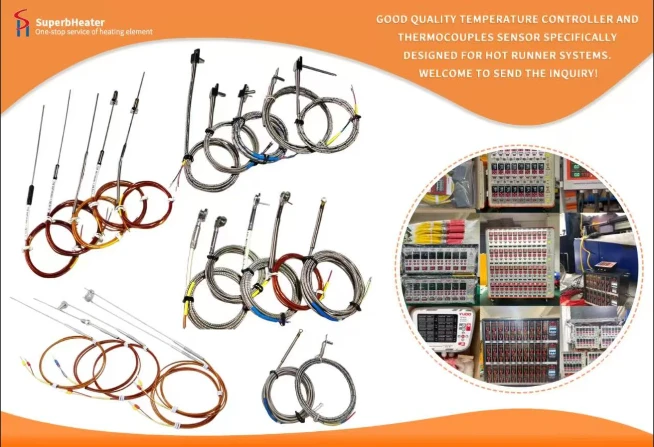

 English
- English
- Français
- Deutsch
- 日本語
- Italiano
- Español
- Português
- русский
- Indonesia
- عربي
- Ελληνικά
- Polski
- فارسی
- עברית
- Kreyòl Ayisyen
- 한국어
- Türkçe
- slovenčina
- Bai Miaowen
- Cymraeg
- dansk
- Lietuvių
- Malti
- Svenska
- Srbija jezik (latinica)
- O'zbek
- ไทย
- suomi
- magyar
- Eesti
- Català
- slovenščina
- Melayu
- Български
- اردو
- România limbi
- bosanski
- हिंदी
- Gaeilgenah Éireann
- Việt Nam
- বাংলা
- íslenska
- Norsk
- Latviešu
- hrvatski
- Nederlands
- Čeština
- українська


