Uneven cooling is a common issue in hot runner molds that leads to part quality problems such as warpage, sink marks, and dimensional variation. Thermocouples, both in the hot runner and the cooling system, can be used to detect and diagnose this condition. The first indication of uneven cooling is a temperature difference between zones. If the hot runner thermocouples show that one zone requires a significantly higher power percentage to maintain the setpoint, it may be because that zone is being cooled more aggressively by the cooling lines. The second indication is a temperature "droop" during the cooling phase. After the injection is complete, the nozzle tip temperature should drop at a consistent rate. If one zone drops faster than others, it indicates that the cooling is more effective in that area. The third step is to use additional thermocouples in the cooling water lines. Install thermocouple sensors on the inlet and outlet of each cooling circuit. A large temperature difference between the inlet and outlet indicates that the cooling circuit is absorbing heat, which is normal. However, if one circuit has a significantly larger temperature difference than others, it suggests uneven cooling. The fourth step is to perform a "cool-down test." Stop the production, turn off the cooling water, and monitor the hot runner thermocouple readings as the mold cools. The zone that cools the fastest is the one most affected by the cooling water. The fifth step is to use a thermal camera. While not a thermocouple, a thermal camera provides a visual map of the mold's temperature distribution. Compare the thermal image with the thermocouple data to confirm any hotspots or cold spots. The sixth step is to correlate the thermocouple data with part quality. If a zone consistently produces parts with warpage or sink marks, and its thermocouple shows a different cooling rate, the link is established. The seventh step is to adjust the cooling water flow. If a zone is overcooled, reduce the flow rate to that circuit, or increase the water temperature. If a zone is undercooled, increase the flow. The thermocouple data provides the feedback to make these adjustments. The eighth step is to use "zoned cooling." In complex molds, use separate cooling circuits for each area, and adjust the flow based on the thermocouple data. By integrating thermocouple data into the cooling management strategy, molders can detect and correct uneven cooling, significantly improving part quality and reducing scrap.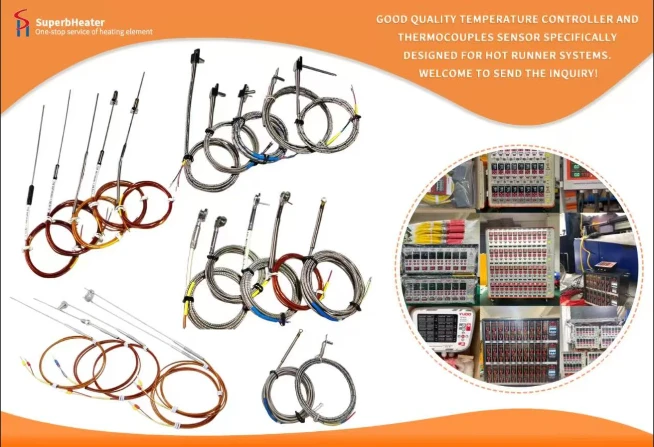

 English
- English
- Français
- Deutsch
- 日本語
- Italiano
- Español
- Português
- русский
- Indonesia
- عربي
- Ελληνικά
- Polski
- فارسی
- עברית
- Kreyòl Ayisyen
- 한국어
- Türkçe
- slovenčina
- Bai Miaowen
- Cymraeg
- dansk
- Lietuvių
- Malti
- Svenska
- Srbija jezik (latinica)
- O'zbek
- ไทย
- suomi
- magyar
- Eesti
- Català
- slovenščina
- Melayu
- Български
- اردو
- România limbi
- bosanski
- हिंदी
- Gaeilgenah Éireann
- Việt Nam
- বাংলা
- íslenska
- Norsk
- Latviešu
- hrvatski
- Nederlands
- Čeština
- українська


