The injection profile-the relationship between screw speed, pressure, and position during the injection phase-directly affects the melt quality and part properties. Thermocouples can provide feedback to optimize this profile. The first step is to understand the shear heating effect. During injection, the melt is forced through the nozzle, generating shear heat. This heat increases the melt temperature. A thermocouple placed at the nozzle tip can detect this temperature rise. The second step is to map the temperature rise. For a given injection profile (e.g., a two-stage profile with a fast first stage and a slow second stage), record the nozzle tip temperature during the injection phase. The temperature will rise during the first stage and may plateau or drop during the second stage. The third step is to correlate the temperature rise with part quality. If the part has a poor surface finish, it may be due to excessive shear heating (too high a temperature). If the part has short shots, the temperature may be too low. The fourth step is to adjust the injection profile. Use the thermocouple data to guide the adjustments. For example, if the temperature rise is too high, reduce the injection speed in the first stage. If the temperature is too low, increase the speed. The fifth step is to use a "profile optimization" algorithm. In some advanced systems, the thermocouple data is fed into an algorithm that automatically adjusts the injection profile to achieve a target temperature. The sixth step is to monitor the temperature at the end of the injection phase. This temperature should be consistent from cycle to cycle. If it varies, the injection profile may need to be adjusted based on the thermocouple reading. The seventh step is to use a "closed-loop" control. The machine adjusts the injection speed based on the thermocouple reading in real time to maintain a constant melt temperature. This is the most advanced application. The eighth step is to validate the optimized profile. After adjusting the profile, produce a set of parts and measure their quality. If the quality is improved, document the new profile. By using thermocouple data to optimize the injection profile, molders can achieve better part quality, reduce cycle time, and minimize scrap, as the profile is tuned to the actual thermal conditions of the hot runner.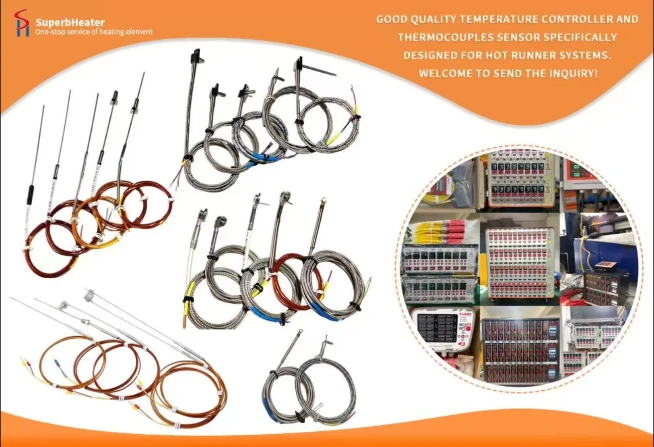

 English
- English
- Français
- Deutsch
- 日本語
- Italiano
- Español
- Português
- русский
- Indonesia
- عربي
- Ελληνικά
- Polski
- فارسی
- עברית
- Kreyòl Ayisyen
- 한국어
- Türkçe
- slovenčina
- Bai Miaowen
- Cymraeg
- dansk
- Lietuvių
- Malti
- Svenska
- Srbija jezik (latinica)
- O'zbek
- ไทย
- suomi
- magyar
- Eesti
- Català
- slovenščina
- Melayu
- Български
- اردو
- România limbi
- bosanski
- हिंदी
- Gaeilgenah Éireann
- Việt Nam
- বাংলা
- íslenska
- Norsk
- Latviešu
- hrvatski
- Nederlands
- Čeština
- українська


