FDA-regulated medical molding requires the highest level of process validation and documentation, and thermocouple performance is a critical element. The first step is to define the validation protocol. The protocol must specify the thermocouple type, accuracy grade, calibration method, and acceptance criteria. For medical devices, Class 1 thermocouples with a tolerance of ±0.5°C are typically required. The protocol should also define the calibration interval (e.g., every 6 months) and the traceability of the reference standards. The second step is to install the thermocouples according to the manufacturer's specifications, documenting the installation depth, torque, and any offsets. The third step is to perform Installation Qualification (IQ). This verifies that the thermocouples are installed correctly. The IQ includes checking the continuity, insulation resistance, and calibration certificate of each thermocouple. The fourth step is to perform Operational Qualification (OQ). This tests the thermocouple's performance under operating conditions. The OQ includes a thermal mapping of the manifold, a response time test, and a temperature uniformity test. The thermocouple data is recorded and analyzed to ensure that the temperature is within the specified tolerance (e.g., ±1°C of the setpoint) for the entire operating range. The fifth step is to perform Performance Qualification (PQ). This tests the thermocouple's performance during actual production. The PQ includes running the process for a defined period (e.g., 24 hours) and continuously monitoring the thermocouple data. The data must show that the temperature is stable and within the tolerance. The sixth step is to document the validation. All test results, calibration certificates, and data logs are compiled into a validation report. The report must be signed by the process engineer and the quality manager. The seventh step is to establish a re-validation schedule. If any thermocouple is replaced or repaired, the zone must be re-validated. A full re-validation is typically required annually. The eighth step is to ensure data integrity. The thermocouple data must be stored in a secure, unalterable format (e.g., a write-once CD-ROM or a secure database) for the required retention period (typically 10 years). The ninth step is to be prepared for an FDA audit. The validation records, calibration certificates, and maintenance logs must be readily accessible. By following this rigorous validation process, medical molders can demonstrate that their thermocouples are performing to specification, ensuring the safety and efficacy of their products. This is not just a regulatory requirement-it is a fundamental part of quality assurance for life-saving devices.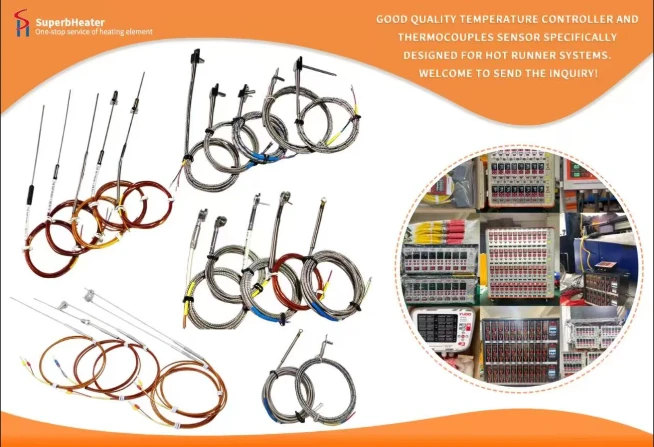

 English
- English
- Français
- Deutsch
- 日本語
- Italiano
- Español
- Português
- русский
- Indonesia
- عربي
- Ελληνικά
- Polski
- فارسی
- עברית
- Kreyòl Ayisyen
- 한국어
- Türkçe
- slovenčina
- Bai Miaowen
- Cymraeg
- dansk
- Lietuvių
- Malti
- Svenska
- Srbija jezik (latinica)
- O'zbek
- ไทย
- suomi
- magyar
- Eesti
- Català
- slovenščina
- Melayu
- Български
- اردو
- România limbi
- bosanski
- हिंदी
- Gaeilgenah Éireann
- Việt Nam
- বাংলা
- íslenska
- Norsk
- Latviešu
- hrvatski
- Nederlands
- Čeština
- українська


