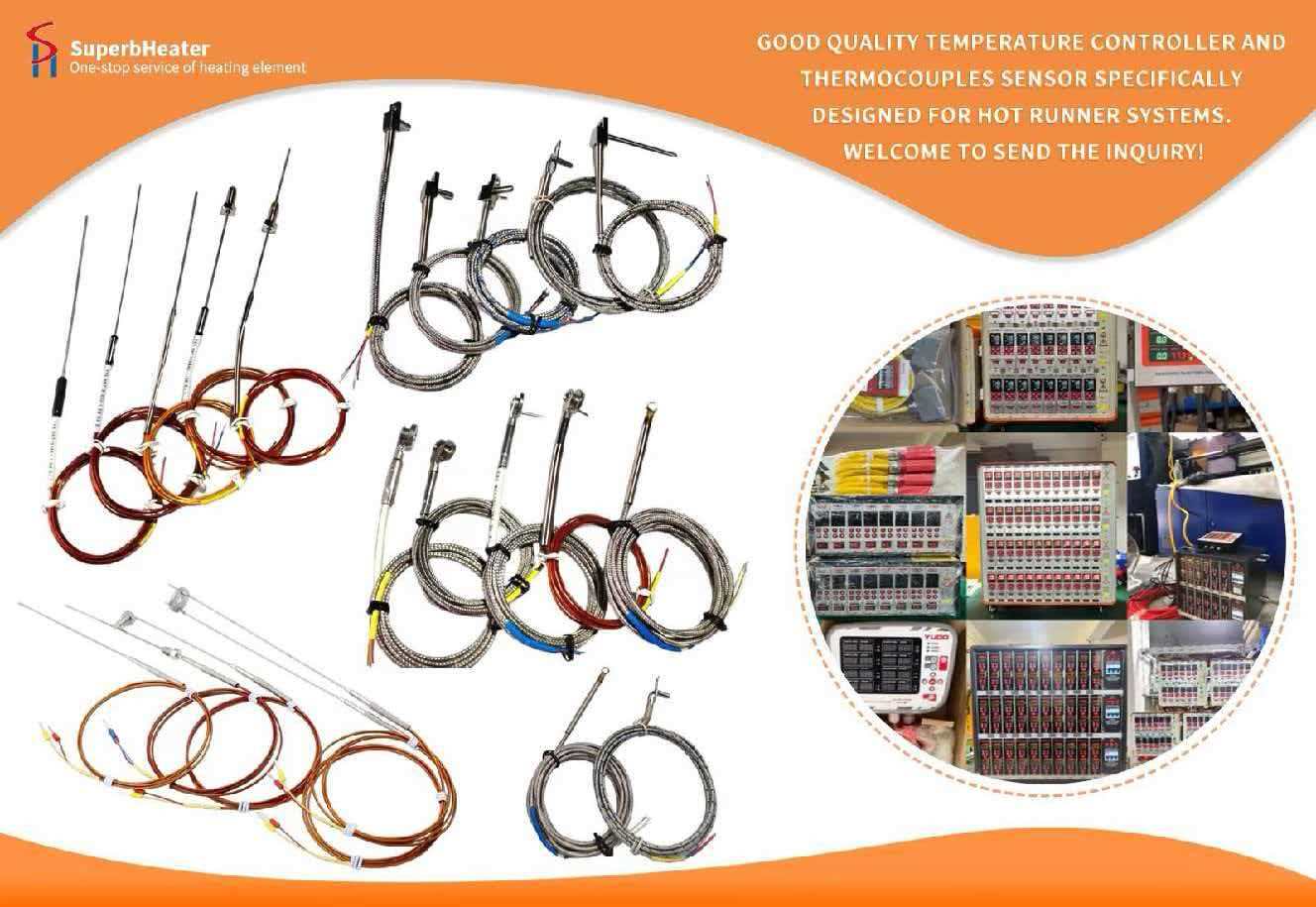
High-Temperature Work Safety: Only after the hot runner temperature has fully dropped to less than 60°C may work start. To prevent burns from the hot runner's leftover heat, put on protective gloves that can withstand high temperatures.
Avoid coming into touch with molten plastic that overflows from the hot runner compartment when disassembling thermocouples to avoid burns to the skin and eyes from hot plastic splatter.
Electrical Work Safety: Make sure the hot runner temperature control system's primary power supply is entirely disconnected before beginning any work. Before continuing, make sure the temperature control module and heating coils are fully de-energised to reduce the possibility of electric shock.
Strictly separate the thermocouple's positive and negative terminals before wiring. Make that the index of the compensating wire and the thermocouple match exactly. Avoid using regular copper wire in place of the compensating wire or reversing the connections.
Measure the insulation resistance between the shielding layer and the thermocouple poles after wiring. To avoid signal interference or short circuits brought on by inadequate insulation, make sure the insulation resistance is ≥1MΩ.
Equipment and Process Safety: To guarantee complete contact between the sensing end and the measuring point, the thermocouple must be put into the hot runner to the necessary depth. Steer clear of over-insertion since this could harm the heating coil.
Before progressively raising the temperature after installation, manually spin the thermocouple to make sure there is no mechanical interference. Avoid quickly raising the temperature as this may result in unexpected overheating and thermocouple damage.
To prevent damage to the internal wires and the possibility of faulty soldering, do not pull or bend the thermocouple armour wires during the replacement operation.
Post-Operation Safety Verification: Before starting the regular heating process, make sure the temperature control system has no alerts and that the temperature display rises smoothly without leaps.
Verify that there are no unusual heating or arcing events and that the difference between the thermocouple reading and the actual temperature in the hot runner is within the permitted range once the production temperature has been reached. The procedure is deemed finished only after that.
Strict adherence to the aforementioned safety measures guarantees steady operation of the subsequent temperature control system while also protecting personnel and preventing damage to the hot runner system during replacement.