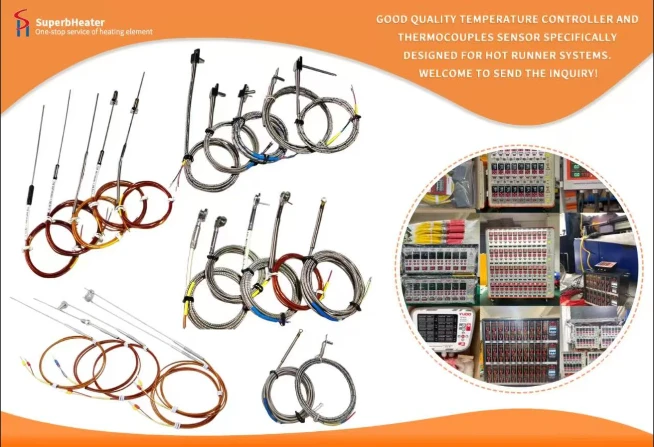
Effective procurement of thermocouples goes beyond price negotiation-it involves selecting reliable suppliers, defining clear specifications, and managing inventory. This final article provides best practices for procurement and supplier management to ensure consistent quality and cost-effectiveness.
Define Specifications Clearly. Ambiguous specifications lead to incorrect products. Specify: thermocouple type (K, J, N), sheath material (316L, Inconel), sheath diameter, probe length, junction type (grounded/ungrounded), connector type, accuracy class (Class 1 or 2), and cable length. Provide a drawing if possible. A well-defined spec reduces errors and returns.
Supplier Qualification. Qualify suppliers based on: quality certifications (ISO 9001, ISO 17025 for calibration), technical expertise (do they understand hot runner applications?), delivery performance (on-time delivery), and financial stability. Visit their facility if possible. A supplier audit checklist ensures consistency.
Sample Testing. Before committing to large orders, request samples. Test them in your mold under actual production conditions. Measure resistance, check calibration, and observe performance (response, drift) for at least one month. This trial prevents buying inferior products.
Total Cost of Ownership (TCO). As discussed in earlier articles, purchase price is only part of the cost. Consider: life expectancy, scrap reduction, downtime avoidance, and maintenance labor. A slightly more expensive sensor that lasts 2× longer often has lower TCO. Make TCO a key evaluation criterion.
Long-Term Agreements. Establish annual supply agreements with your preferred suppliers. This secures pricing, ensures availability, and reduces procurement effort. Include clauses for lead time (e.g., 5-day delivery), quality guarantees, and technical support. Long-term relationships benefit both parties.
Consignment Stock. Some suppliers offer consignment stock-they store inventory at your facility and you pay as you use. This reduces your inventory holding cost and ensures spares are always available. Consignment is particularly beneficial for high-volume zones.
Quality Inspections. Upon receiving a shipment, inspect a sample: check packaging (no damage), measure resistance, verify type markings, and inspect connectors. If any defect is found, reject the batch. Consistent quality inspections pressure suppliers to maintain standards.
Technical Support. Choose a supplier that offers technical support: application engineering, troubleshooting assistance, and training. Quick phone support can resolve issues without sending technicians. This saves downtime and builds expertise in your team.
Feedback Loop. Provide feedback to suppliers on performance. If a particular sensor type fails prematurely, share the data-they may offer a better alloy or design. Suppliers often have insights from other customers that can benefit you. A two-way communication loop drives continuous improvement.
Documentation and Traceability. Require each sensor to have a unique serial number and a calibration certificate. This enables traceability in quality audits. If a sensor fails, the serial number helps track the production batch and identify potential systemic issues.
Cost Negotiation. Negotiate based on volume and long-term commitment. Request pricing tiers for different order quantities. Also, ask about discounts for standard sensors (off-the-shelf) vs. custom. Standard sensors are cheaper and faster to deliver.
Lead Time Management. Plan thermocouple orders based on consumption forecasts. Do not wait until stock is empty-that forces air freight costs and emergency procurement. Use a reorder point system: when stock drops to a defined minimum, place an order.
Alternative Suppliers. Maintain a secondary supplier for critical sensors. If your primary supplier has a production issue, the secondary can fill the gap. However, ensure the secondary meets the same quality standards-requalify them periodically.
Compliance and Certifications. For regulated industries (medical, aerospace), ensure suppliers provide ISO 17025 calibration certificates and material certifications (e.g., alloy composition). Without these, your audit may fail. Make compliance a contractual requirement.
Case Study: Supplier Consolidation. A plant consolidated from six thermocouple suppliers to two. Standardization and volume discounts reduced procurement costs by 15%. Better supplier relationships also improved technical support and reduced lead times from 4 weeks to 2 weeks.
Sustainable Practices. Consider suppliers with sustainability initiatives: recyclable packaging, responsible alloy sourcing, and take-back programs. Many molders are now requiring suppliers to meet environmental standards (e.g., RoHS, REACH). This is increasingly important for customer relations.
Review Supplier Performance. Annually, review supplier performance: quality (return/reject rate), delivery (on-time percentage), and responsiveness. Share the review with the supplier and set improvement goals. If performance declines, consider switching.
Training for Procurement Staff. Ensure procurement staff understand thermocouple basics-type, materials, specifications. This prevents ordering the wrong product. Provide them with a simple reference guide. Involve them in technical reviews so they appreciate the application.
Final Advice. Procurement is not a transaction; it is a partnership. By working closely with a trusted supplier, you gain access to new technologies, better pricing, and reliable support. Invest time in supplier management-it pays dividends in sensor performance and production uptime. With the right procurement practices, thermocouples become a source of competitive advantage rather than a recurring headache.