In automated high-volume injection molding plants, the hidden costs of thermocouple downtime can far exceed the visible expenses of replacement parts and labor. When a thermocouple fails, the automated production line does not simply stop-it triggers a cascade of consequences that erode profitability. The most immediate cost is lost production time. In a 24/7 automated facility running at a 5-second cycle, every minute of downtime represents a measurable revenue loss. However, the hidden costs are more insidious. First, there is the cost of restabilization. Even after the thermocouple is replaced, the hot runner zone must be reheated and the process revalidated. During this period, the parts produced are often marginal, leading to increased scrap rates. Second, there is the cost of quality investigation. If the failure was not immediately detected, the entire production run since the last quality check must be quarantined and inspected. In automotive and medical applications, this can mean thousands of parts requiring 100% inspection. Third, there is the cost of overtime. If a failure occurs at shift end, maintenance technicians may need to stay late, incurring overtime pay and reducing their effectiveness the next day. Fourth, there is the cost of expedited shipping. If the plant does not have a spare thermocouple on hand, an emergency order must be placed, often with overnight shipping charges that exceed the cost of the sensor itself. Fifth, there is the cost of lost opportunity. A machine that is down due to a thermocouple issue cannot be used to run other jobs, potentially delaying deliveries to other customers. Sixth, there is the cost of operator morale. Repeated failures lead to operator frustration and a perception that the equipment is unreliable, reducing job satisfaction and increasing turnover. Seventh, there is the cost of damaged equipment. If a thermocouple failure causes overheating, it can damage the nozzle or manifold, leading to expensive repairs that dwarf the cost of the sensor. Eighth, there is the cost of customer dissatisfaction. If a failure causes a delivery delay, it can harm the company's reputation and potentially lead to lost future business. To quantify these hidden costs, consider a simple calculation: a 30-minute downtime costs $500 in lost production, $200 in labor (overtime), $100 in scrap, $50 in expedited shipping, and $100 in rework labor-total $950. If this happens once a month, the annual cost is $11,400 per machine. For a plant with 20 machines, this is 100 more per sensor) and implementing a preventive replacement program, the frequency of failures can be reduced by 80%, saving over $180,000 annually. This calculation highlights that thermocouple management is not a minor issue-it is a significant lever for operational cost reduction in automated production environments. By revealing and addressing these hidden costs, plant managers can justify investments in better sensors, training, and maintenance systems.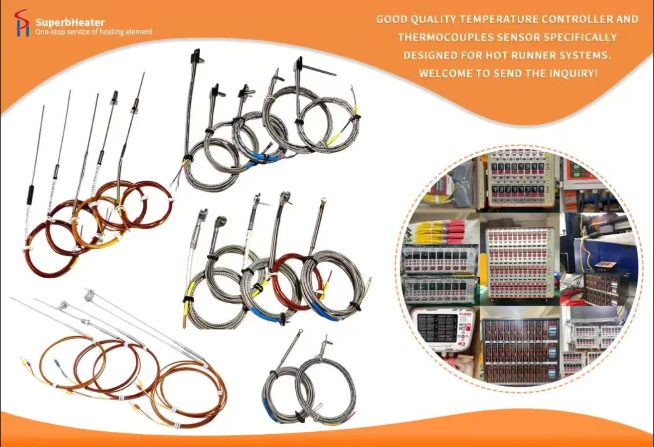

 English
- English
- Français
- Deutsch
- 日本語
- Italiano
- Español
- Português
- русский
- Indonesia
- عربي
- Ελληνικά
- Polski
- فارسی
- עברית
- Kreyòl Ayisyen
- 한국어
- Türkçe
- slovenčina
- Bai Miaowen
- Cymraeg
- dansk
- Lietuvių
- Malti
- Svenska
- Srbija jezik (latinica)
- O'zbek
- ไทย
- suomi
- magyar
- Eesti
- Català
- slovenščina
- Melayu
- Български
- اردو
- România limbi
- bosanski
- हिंदी
- Gaeilgenah Éireann
- Việt Nam
- বাংলা
- íslenska
- Norsk
- Latviešu
- hrvatski
- Nederlands
- Čeština
- українська


