Multi-material molding, where two or more different resins are injected sequentially or simultaneously, introduces unique thermocouple challenges. The first consideration is the different temperature requirements of each material. A typical combination is a rigid plastic (e.g., PC at 280°C) and a soft TPE (e.g., at 200°C). The hot runner must have independent temperature zones for each material, each with its own thermocouple. The challenge is thermal isolation: the high-temperature zone can conduct heat to the low-temperature zone, disturbing its control. The thermocouple in the low-temperature zone may read a higher temperature, causing its controller to under-heat. To mitigate, use thermal barriers (air gaps or insulating washers) between the zones, and ensure that the thermocouple is placed to minimize the influence of the neighboring heat source. The second consideration is the possibility of material cross-contamination. If the thermocouple probe is not completely sealed, the high-temperature melt from one material could seep into the mounting hole and mix with the other material. Use a robust seal and a smooth probe surface that does not trap residues. The third consideration is the different thermal conductivities of the materials. A high-viscosity material (like PC) transfers heat differently than a low-viscosity one (like TPE). The thermocouple's response to a step change in heater power may differ depending on which material is flowing. The controller's PID parameters may need to be optimized for each material. Some advanced controllers allow "recipe" switching, where the PID parameters are changed automatically when the material changes. The fourth consideration is the mechanical impact of the moving core or rotating platen. In two-shot molding, the mold moves, which can stress the thermocouple cables. Use flexible cables with generous service loops and strain relief. The fifth consideration is the need for additional monitoring. To ensure that both materials are at the correct temperature at the time of injection, some systems use a thermocouple to monitor the gate temperature for each material. This helps in detecting "cross-fill" (the wrong material entering the wrong cavity). The sixth consideration is the calibration and validation. In multi-material molding, the process validation must include temperature monitoring for each material's zone. The thermocouples must be individually calibrated and their data tracked separately. By addressing these unique considerations, molders can successfully implement multi-material molding, producing complex parts with multiple properties and colors, while maintaining high quality and process stability.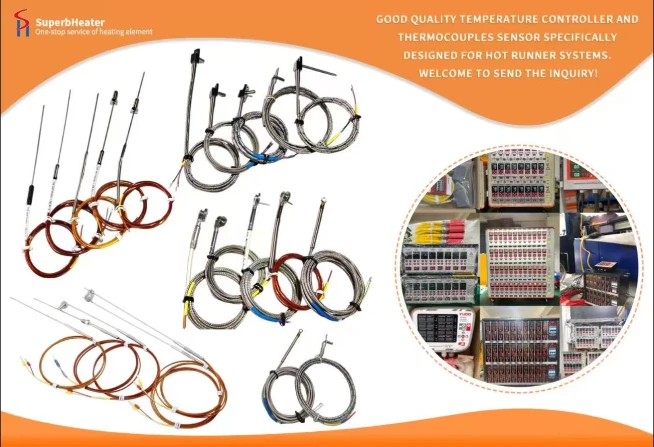

 English
- English
- Français
- Deutsch
- 日本語
- Italiano
- Español
- Português
- русский
- Indonesia
- عربي
- Ελληνικά
- Polski
- فارسی
- עברית
- Kreyòl Ayisyen
- 한국어
- Türkçe
- slovenčina
- Bai Miaowen
- Cymraeg
- dansk
- Lietuvių
- Malti
- Svenska
- Srbija jezik (latinica)
- O'zbek
- ไทย
- suomi
- magyar
- Eesti
- Català
- slovenščina
- Melayu
- Български
- اردو
- România limbi
- bosanski
- हिंदी
- Gaeilgenah Éireann
- Việt Nam
- বাংলা
- íslenska
- Norsk
- Latviešu
- hrvatski
- Nederlands
- Čeština
- українська


