Hot runner thermocouples are consumable components, but their service life varies widely-from a few months in extreme conditions to over five years in well‑managed systems. The primary wear mechanisms are oxidation of the thermocouple alloy, diffusion between the wires and the mineral insulation, mechanical fatigue from thermal cycling, and corrosion from aggressive polymer additives. Predicting remaining life is not an exact science, but trend monitoring can provide early warnings. By periodically measuring the thermocouple's output at a fixed reference temperature (e.g., using a portable calibrator during mold maintenance), you can plot drift over time. A consistent drift rate that suddenly accelerates often signals imminent failure. Likewise, a gradual increase in insulation resistance leakage-measured with a megohmmeter-indicates moisture ingress or insulation breakdown, which usually precedes an open circuit. To extend lifespan, several proactive measures are effective. First, ensure that the thermocouple is not exposed to temperatures beyond its rated maximum; overshooting during startup or maintenance is a common killer. Second, use soft start routines in the controller to minimize thermal shock. Third, keep the mounting hole clean and apply anti‑seize compound on the threads to prevent seizing, but avoid getting it on the sensing tip. Fourth, use strain relief on cables to prevent pulling forces from transmitting to the fragile junction inside the probe. Fifth, regularly inspect and tighten all electrical connections to avoid arcing or intermittent contacts that can cause localized heating at the connector. Sixth, consider using a higher‑grade sheath material (e.g., Inconel instead of stainless steel) for abrasive or corrosive applications. Seventh, if the process cycles between high and low temperatures frequently, choose a thermocouple with a thicker mineral insulation to better withstand differential expansion. While no thermocouple lasts forever, a well‑maintained unit can often exceed its expected life by 50–100%. Tracking individual zone histories and replacing thermocouples in a scheduled, preventive manner-rather than reactively after failure-reduces unplanned downtime and ensures consistent part quality. Many plants now use a "calendar‑based" replacement policy for critical molds, changing thermocouples annually regardless of appearance, which has proven to be cost‑effective in high‑value production lines.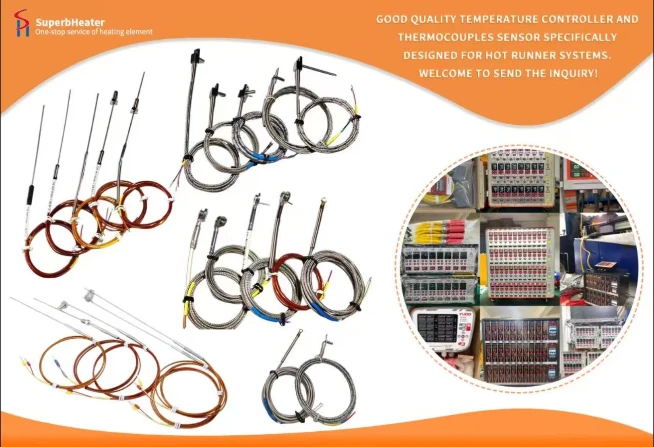

 English
- English
- Français
- Deutsch
- 日本語
- Italiano
- Español
- Português
- русский
- Indonesia
- عربي
- Ελληνικά
- Polski
- فارسی
- עברית
- Kreyòl Ayisyen
- 한국어
- Türkçe
- slovenčina
- Bai Miaowen
- Cymraeg
- dansk
- Lietuvių
- Malti
- Svenska
- Srbija jezik (latinica)
- O'zbek
- ไทย
- suomi
- magyar
- Eesti
- Català
- slovenščina
- Melayu
- Български
- اردو
- România limbi
- bosanski
- हिंदी
- Gaeilgenah Éireann
- Việt Nam
- বাংলা
- íslenska
- Norsk
- Latviešu
- hrvatski
- Nederlands
- Čeština
- українська


