Predicting the remaining useful life of a hot runner thermocouple is an emerging capability that can revolutionise maintenance strategies. Rather than waiting for failure or using fixed‑interval replacement, predictive models analyse the sensor's degradation rate to estimate when it will become unreliable. The primary degradation mechanism is drift-a slow change in the thermoelectric output at a given temperature due to alloy oxidation, diffusion, or structural changes. At hot runner temperatures (250–400°C), drift is typically linear with time for the first thousands of hours, then accelerates. Using the Arrhenius model, which relates reaction rates to temperature, manufacturers can accelerate aging by running thermocouples at higher temperatures (e.g., 600°C) and measuring drift. The data is then extrapolated to the actual operating temperature. For example, if a thermocouple drifts 0.1°C per 1000 hours at 400°C, and the acceptable limit is ±1.5°C, the life is approximately 15,000 hours. However, actual conditions-thermal cycling, vibration, and corrosive gases-accelerate degradation beyond the Arrhenius prediction. Therefore, some suppliers use a weighted stress factor that combines temperature, cycle count, and material type. To apply this in the plant, maintenance teams can track drift by periodically measuring the thermocouple's output at a fixed reference temperature (using a portable calibrator). Plotting drift over time allows fitting a linear or exponential curve; the slope indicates the degradation rate. A sudden increase in slope is a clear warning. Another indicator is the insulation resistance (IR) trend-a gradual decline suggests moisture or contaminant ingress, which often precedes a catastrophic failure. Advanced controllers can automatically log the heater power required to maintain setpoint; if the power increases while the thermocouple reading stays constant, the heater may be degrading, but if the power drops, the thermocouple may be drifting high. Some machine learning models use these multiple parameters-drift, IR, power, and noise-to create a health index. While currently limited to high‑end systems, this predictive approach is becoming more accessible. For most plants, a simpler method is to use the "inflection point" detection: when the drift accelerates beyond a threshold (e.g., >0.2°C per month), schedule replacement. By implementing a drift‑tracking program, plants can replace thermocouples just before they fail, reducing unplanned downtime and scrap, while maximising the utilisation of each sensor. This is the essence of condition‑based maintenance, moving from reactive to proactive.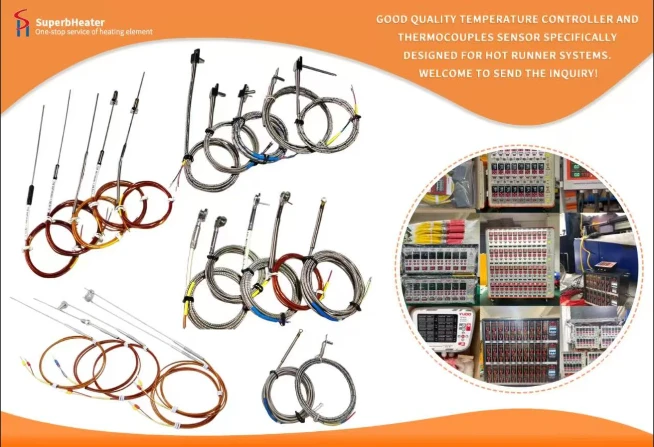

 English
- English
- Français
- Deutsch
- 日本語
- Italiano
- Español
- Português
- русский
- Indonesia
- عربي
- Ελληνικά
- Polski
- فارسی
- עברית
- Kreyòl Ayisyen
- 한국어
- Türkçe
- slovenčina
- Bai Miaowen
- Cymraeg
- dansk
- Lietuvių
- Malti
- Svenska
- Srbija jezik (latinica)
- O'zbek
- ไทย
- suomi
- magyar
- Eesti
- Català
- slovenščina
- Melayu
- Български
- اردو
- România limbi
- bosanski
- हिंदी
- Gaeilgenah Éireann
- Việt Nam
- বাংলা
- íslenska
- Norsk
- Latviešu
- hrvatski
- Nederlands
- Čeština
- українська


