High‑cavitation packaging molds-typically 48, 64, or even 128 cavities for caps, closures, and thin‑wall containers-push thermocouples to their limits in terms of speed, consistency, and reliability. The first challenge is the sheer number of temperature zones. With dozens of nozzles, each requiring independent control, the wiring becomes complex, and the risk of cross‑connection or interference multiplies. Thermocouples must be clearly labelled and logically arranged. The second challenge is the extremely fast cycle times-often 3–5 seconds for caps-which means the melt temperature must be highly stable, because there is little time for the controller to correct any disturbance. Therefore, thermocouples with very fast response times (<0.5 seconds) are essential. Thin‑probe (0.5 mm diameter) grounded junctions are often used to achieve this speed. However, such thin probes are mechanically fragile and can be damaged by the high injection pressures and mold clamping forces. Robust mounting with proper strain relief is critical. The third challenge is maintaining uniform temperature across all cavities. In high‑cavitation molds, heat loss to the mold plate is uneven-corner cavities cool faster than centre ones. Thermocouples must accurately reflect these differences so that the controller can apply zone‑specific offsets. Some high‑end systems use a master‑slave thermocouple arrangement, where one zone is the master and the others track its setpoint with individual offsets. The fourth challenge is the accumulation of process deposits-plastic degradation products and mold release agents can coat the thermocouple probe, insulating it and slowing response. Regular cleaning is required, but frequent removal and re‑installation of thin probes can damage them. To mitigate, some designs use a spring‑loaded, quick‑release mechanism that allows the probe to be wiped without unthreading. The fifth challenge is the high ambient temperature inside the mold, especially in the manifold area, which can cause the compensating cable's insulation to degrade. High‑temperature silicone or fiberglass cables are essential. In packaging, any temperature drift that causes a single cavity to produce a defective part can contaminate the entire batch, especially in food contact applications. Thus, thermocouples must have extremely low drift, often specified as <0.5°C per year. To achieve this, premium packaging thermocouples are vacuum‑annealed and burn‑in tested at the factory. Finally, the connectors must be designed for high‑density installation, often using miniature DIN connectors that fit in tight spaces. In summary, high‑cavitation packaging molds represent one of the most demanding environments for thermocouples, requiring a combination of fast response, mechanical robustness, thermal stability, and ease of maintenance. Selecting thermocouples specifically engineered for this application-rather than general‑purpose sensors-is the key to achieving the high yields and low scrap rates that packaging production demands.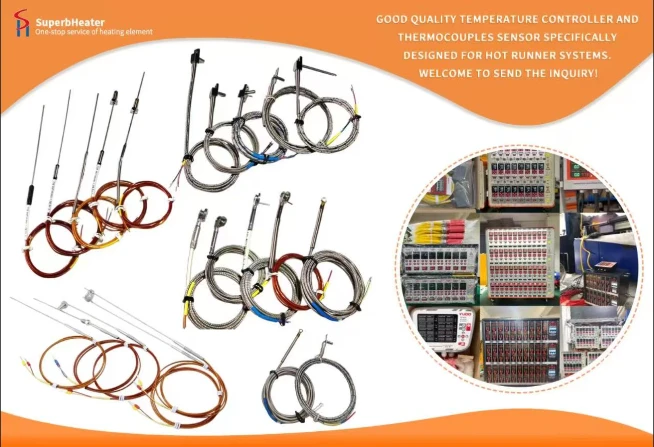

 English
- English
- Français
- Deutsch
- 日本語
- Italiano
- Español
- Português
- русский
- Indonesia
- عربي
- Ελληνικά
- Polski
- فارسی
- עברית
- Kreyòl Ayisyen
- 한국어
- Türkçe
- slovenčina
- Bai Miaowen
- Cymraeg
- dansk
- Lietuvių
- Malti
- Svenska
- Srbija jezik (latinica)
- O'zbek
- ไทย
- suomi
- magyar
- Eesti
- Català
- slovenščina
- Melayu
- Български
- اردو
- România limbi
- bosanski
- हिंदी
- Gaeilgenah Éireann
- Việt Nam
- বাংলা
- íslenska
- Norsk
- Latviešu
- hrvatski
- Nederlands
- Čeština
- українська


