I. Targeted Parameter Optimization Based on Chamber Number
Single/2-Cavity Small Hot Runners: Eliminate all redundant heat preservation steps, allowing 100% full power output throughout, increasing the heating rate to 4℃/min, and reducing total time to less than 30 minutes.
4-8-Cavity Medium Hot Runners: Rapid full-power heating up to 100℃, with power restrictions relaxed to 85% after 100℃, and each heat preservation period reduced by 5 minutes, reducing total time to less than 50 minutes.
16-32-Cavity Large Multi-Cavity Hot Runners: Synchronous full-power heating up to 120℃, eliminating peak heating restrictions, with power restrictions relaxed to 75% after 120℃, and each heat preservation period reduced by 10 minutes, reducing total time to less than 90 minutes. For ultra-large multi-cavity hot runners with 64 or more cavities: First, the system operates in two staggered, full-power phases before reaching 120℃ to avoid power overload. After 120℃, the power limit is relaxed to 65%. The holding time for each phase is reduced by 15 minutes, resulting in a total heating time of less than 150 minutes.
II. General Hardware Upgrade Time Reduction Solution
Replacing the heating plate with a high-power-density cast aluminum plate increases heating power per unit area by 20%~30% and heat transfer efficiency by 30%, reducing the overall heating time for all hot runner cavities by 20%.
Filling the contact surface between the heating element and the runner plate with high thermal conductivity silicone grease eliminates air gap thermal resistance, further accelerating heat transfer.
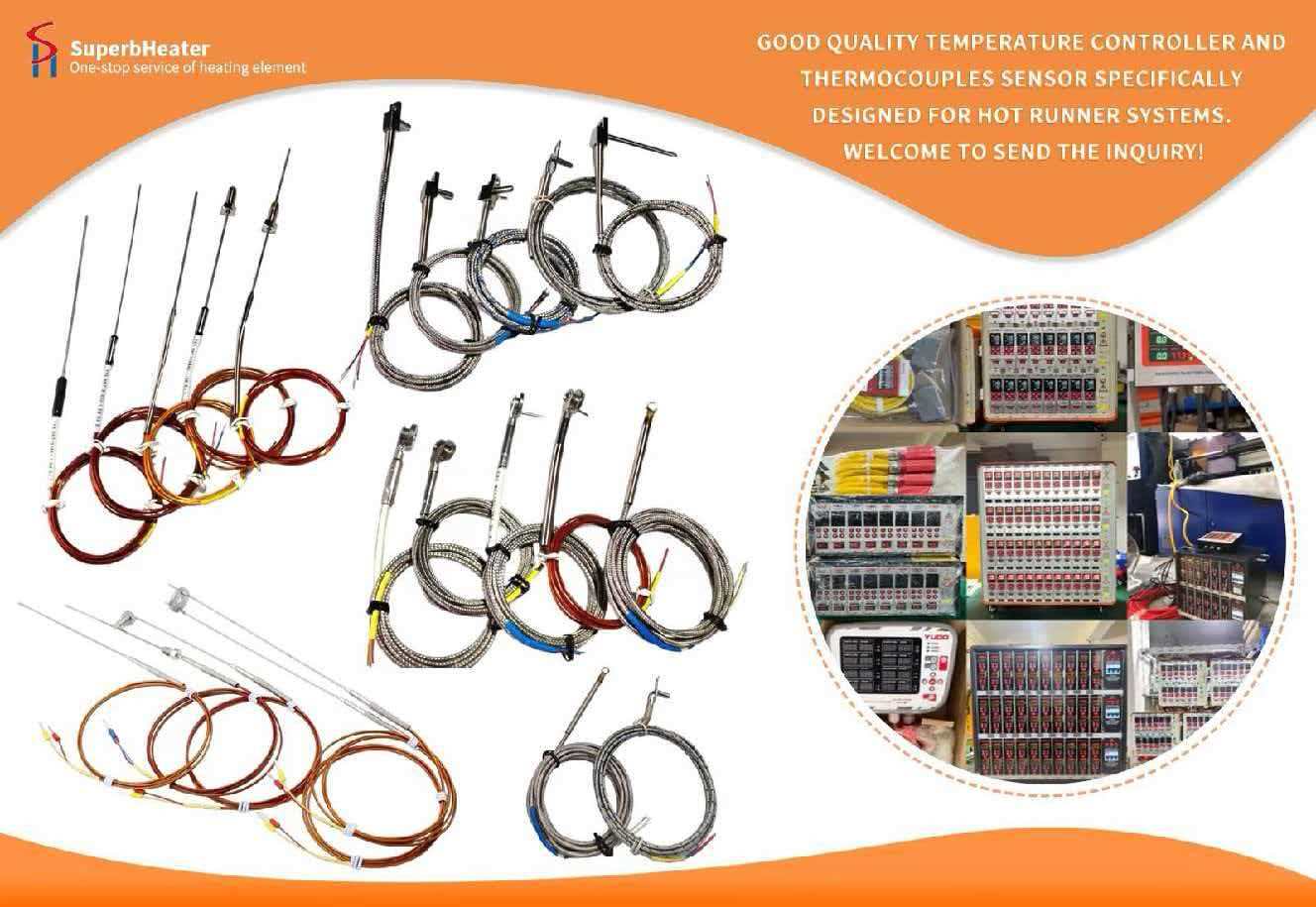
Replacing the temperature sensor with a high-speed sensor with a response time ≤2 seconds reduces temperature acquisition lag, preventing the temperature control system from delaying heating and slowing down the heating process.
III. Pre-process Time Reduction Solution
During non-production intervals, the hot runner is kept at a low-temperature standby state of 80~100℃. The next startup does not require starting from room temperature, directly reducing heating time by more than 50%.
Complete thermocouple calibration and PID parameter self-tuning in advance. Before heating, confirm all hardware connections are normal to avoid wasting time troubleshooting and downtime due to abnormal parameters during heating.
IV. Boundary Risk Management
When processing easily degradable sensitive materials such as PVC/POM, reduce the heating rate of all chambers by 30%. Do not forcibly shorten the heating time to avoid localized rapid overheating that could lead to material degradation.
Monitor the temperature difference across the entire heating process to ≤±5℃ to prevent excessively rapid heating that could cause thermal deformation of hot runner metal components, leading to nozzle misalignment, sealing surface leaks, and other problems.