I. Hardware Upgrades for Efficiency Improvement
Replacing with High-Power Heating Elements: Upgrade traditional heating coils to high-power-density cast aluminum heating plates, increasing heating power per unit area by 20%~30% and significantly accelerating heat transfer.
Eliminating Contact Thermal Resistance: Fill the contact surface between the heating element and the runner plate with a high-thermal-conductivity thermal grease to eliminate air gaps, improving heat transfer efficiency by over 30%.
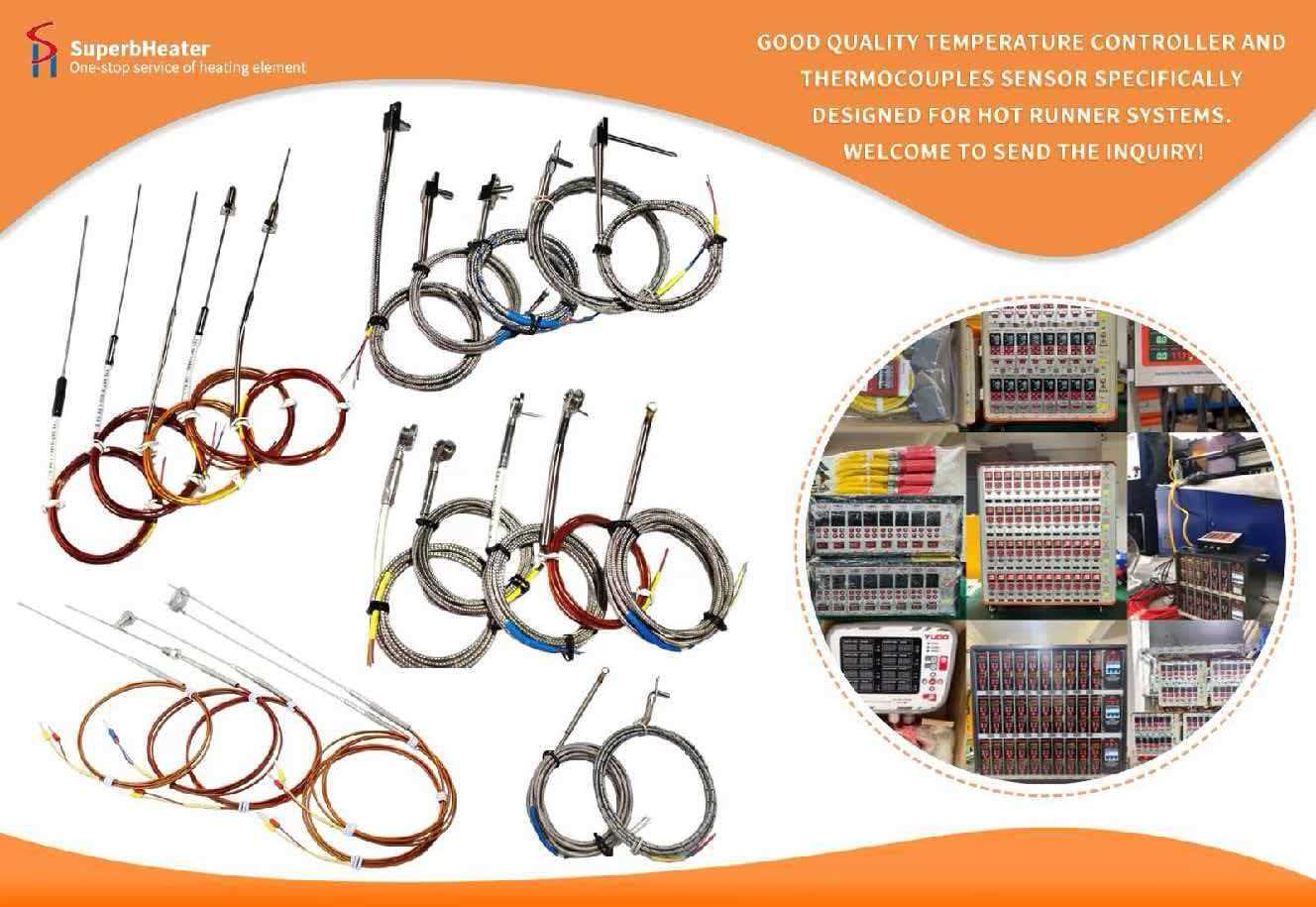
Upgrading to High-Speed Temperature Sensors: Replace with high-precision thermocouples with a response time ≤2 seconds, reducing temperature acquisition lag and preventing the temperature control system from delaying heating and slowing down the heating rate.
II. Optimizing Heating Strategy
Segmented Variable Power Heating: In the low-temperature segment (room temperature → 100℃), allow the heating element to output 100% full power for rapid temperature rise. After 100℃, limit the power to below 70%, balancing heating efficiency and temperature stability.
Reduce Redundant Heating Time: Assuming the hot runner is free of moisture and its insulation resistance is acceptable, reduce the heating time for the low-temperature section from 30 minutes to 15 minutes, and the heating time for the medium-temperature section from 20 minutes to 10 minutes, shortening the total heating time by approximately 30%.
Eliminate Peak Heating Restrictions: Provided the total power supply capacity of the workshop allows, all heating zones should start heating simultaneously, avoiding zonal waiting that slows down the overall progress.
III. Reduce Pre-Process Time:
Set Low-Temperature Standby Mode: During non-production intervals, maintain the hot runner at a low-temperature standby state of 80-100℃. The next startup will not require starting from room temperature, directly reducing heating time by more than 50%.
Complete Pre-calibration in Advance: Complete thermocouple calibration and PID parameter self-tuning in advance. Before heating, confirm all hardware connections are normal to avoid wasting time troubleshooting and stopping the machine midway through heating due to abnormal parameters.
Pre-calibration in Advance: Complete thermocouple calibration and PID parameter self-tuning in advance. Before heating, confirm all hardware connections are normal to avoid wasting time troubleshooting and stopping the machine midway through heating.
IV. Chamber Number Adaptation Adjustment
Single-chamber/2-chamber small hot runner: Full power output throughout, total heating time can be reduced to less than 30 minutes.
4-8-chamber medium hot runner: Power limit relaxed to 85% after 100℃, total heating time can be reduced to less than 50 minutes.
16-32-chamber large multi-chamber hot runner: Power limit relaxed to 75% after 120℃, total heating time can be reduced to less than 90 minutes.
64-chamber and above ultra-large multi-chamber hot runner: Staggered full power heating in two groups, total heating time can be reduced to less than 150 minutes.
V. Boundary Risk Management
When processing easily degradable sensitive materials such as PVC/POM, the heating time must not be forcibly reduced. The original gradient heating rhythm must be maintained to avoid localized rapid overheating that could lead to material degradation.
Throughout the heating process, the temperature difference across the entire area is monitored to be ≤±5℃, preventing excessively rapid heating that could cause thermal deformation of the hot runner metal components, leading to problems such as nozzle misalignment and leakage at the sealing surface.