Reconditioning used thermocouples is a potential cost-saving measure, but it requires careful consideration of the risks. The most common reconditioning procedure is to repair the connector. Over time, connector pins become corroded or lose their spring tension. Replacing the connector with a new one, using a thermocouple-rated connector, can restore signal integrity. Another procedure is to replace the compensating cable. If the cable is damaged (cracked, melted, or cut), it can be replaced, provided the spliced joint is made correctly using thermocouple-grade wire and a specialized welding or crimping technique. Soldering is not acceptable because it introduces a third metal that creates an error. The joint must be insulated and protected. A more extensive reconditioning is to shorten the probe. If the probe is too long for a new application, it can be cut and rewelded. However, this is a delicate operation-the junction must be re-formed, the mineral insulation sealed, and the drift re-calibrated. Only a few specialized repair shops can do this reliably. Reconditioning is generally not recommended for thermocouples that have been in service for a long time, because the thermocouple alloy itself has undergone aging and may have changed composition, making future drift unpredictable. Even if the connector and cable are new, the sensor element may have drifted beyond the acceptable tolerance. For this reason, reconditioning is typically limited to "young" thermocouples-those with less than 500 operating hours-that were damaged by mechanical means (e.g., a crushed connector) rather than thermal degradation. Before reconditioning, test the thermocouple's accuracy by measuring its output at a stable temperature (e.g., a dry-block calibrator). If the deviation from the standard is within tolerance (e.g., ±1°C), reconditioning is viable. After reconditioning, the thermocouple must be re-calibrated and a new calibration certificate issued. Always document the reconditioning and re-certification. In many industries, especially medical and automotive, the use of reconditioned thermocouples is not allowed due to traceability requirements. For general industrial molding, reconditioning can save 30–50% of the cost of a new thermocouple. However, the labor cost of reconditioning and the risk of failure must be weighed against the cost of a new sensor. In practice, reconditioning connectors and cables is common; reconditioning the probe is rare. A practical strategy is to have a stock of new thermocouples for critical zones and use reconditioned ones for non-critical zones (e.g., sprue bushings). By implementing a reconditioning program, plants can reduce waste and lower their consumable costs, but quality and reliability must remain the highest priorities.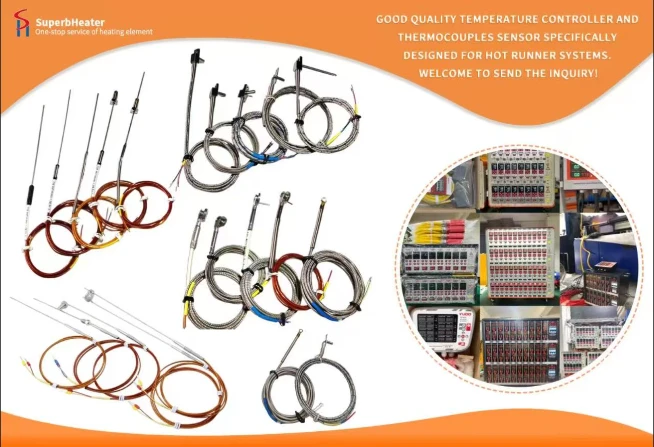

 English
- English
- Français
- Deutsch
- 日本語
- Italiano
- Español
- Português
- русский
- Indonesia
- عربي
- Ελληνικά
- Polski
- فارسی
- עברית
- Kreyòl Ayisyen
- 한국어
- Türkçe
- slovenčina
- Bai Miaowen
- Cymraeg
- dansk
- Lietuvių
- Malti
- Svenska
- Srbija jezik (latinica)
- O'zbek
- ไทย
- suomi
- magyar
- Eesti
- Català
- slovenščina
- Melayu
- Български
- اردو
- România limbi
- bosanski
- हिंदी
- Gaeilgenah Éireann
- Việt Nam
- বাংলা
- íslenska
- Norsk
- Latviešu
- hrvatski
- Nederlands
- Čeština
- українська


