High-gloss appearance resins, such as optical-grade PC, PMMA, and ABS, are used in applications like automotive interior trim, consumer electronics housings, and optical lenses. These materials demand flawless surface finish with no visible flow marks, weld lines, or gate blush. Thermocouples play a critical role in achieving this by ensuring precise and stable temperature control. The first selection criterion is ultra-high temperature accuracy. High-gloss resins have very narrow processing windows-often just 2-3°C. A thermocouple drift of 1°C can cause visible defects. Class 1 thermocouples with a tolerance of ±0.5°C are essential. The second criterion is fast response. High-gloss applications often use rapid injection speeds to freeze the surface quickly, preventing defects. The thermocouple must respond in milliseconds to capture the rapid temperature changes during injection. Grounded junctions with thin probes (0.5-0.8 mm) provide the fastest response. The third criterion is low thermal mass. The thermocouple itself must not act as a heat sink, as this can cause localized cooling that affects the melt's viscosity and flow. A small probe tip with minimal mass is required. The fourth criterion is placement. The thermocouple must be positioned at the gate, where the surface quality is most influenced. It should be placed within 2-3 mm of the gate, but in a location that does not disturb the melt flow. The fifth criterion is the sheath material. High-gloss resins are sensitive to contamination. The sheath must be made of a material that does not react with the resin or release any particles. 316 stainless steel with a smooth, polished finish is typical. The sixth criterion is resistance to shear heating. High-gloss resins are often injected at high speeds, generating significant shear heat that can cause localized overheating. The thermocouple must withstand this transient heat without drifting. The seventh criterion is the cable and connector. The cable must be flexible and have a low outgassing insulation, as any volatiles can condense on the mold surface and cause defects. PTFE-insulated cables are preferred. The eighth criterion is the calibration. The thermocouple should be calibrated at the specific processing temperature (e.g., 280°C) to ensure the highest accuracy at that point. The calibration certificate should include the deviation at that temperature. By selecting thermocouples that meet these stringent criteria, molders of high-gloss parts can achieve the flawless surface finish that customers demand, reducing scrap and rework. The investment in premium thermocouples is justified by the high value of the parts produced and the cost of a single reject.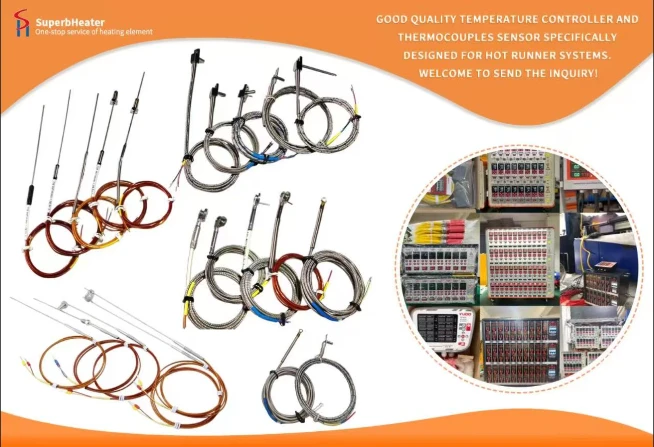

 English
- English
- Français
- Deutsch
- 日本語
- Italiano
- Español
- Português
- русский
- Indonesia
- عربي
- Ελληνικά
- Polski
- فارسی
- עברית
- Kreyòl Ayisyen
- 한국어
- Türkçe
- slovenčina
- Bai Miaowen
- Cymraeg
- dansk
- Lietuvių
- Malti
- Svenska
- Srbija jezik (latinica)
- O'zbek
- ไทย
- suomi
- magyar
- Eesti
- Català
- slovenščina
- Melayu
- Български
- اردو
- România limbi
- bosanski
- हिंदी
- Gaeilgenah Éireann
- Việt Nam
- বাংলা
- íslenska
- Norsk
- Latviešu
- hrvatski
- Nederlands
- Čeština
- українська


