Manifold cracking is a catastrophic failure that can result in molten plastic leakage, mold damage, and significant production downtime. While manifold cracks are often caused by mechanical stress or thermal fatigue, thermocouples can provide early warning signs. The first indicator of potential cracking is a sudden change in the temperature profile of the affected zone. As a crack develops, it can create a thermal barrier or a path for heat to escape, causing the thermocouple to read a different temperature than expected. A crack that opens and closes with thermal cycling will cause intermittent temperature fluctuations. The second indicator is a change in the required heater power. A crack can act as a heat sink, drawing heat away from the zone. The controller will apply more power to compensate, resulting in a power percentage increase that is not explained by other factors. The third indicator is the presence of temperature gradients. If a crack is forming, it may cause a temperature difference between the two sides of the crack. By using multiple thermocouples on the manifold, this gradient can be detected. The fourth step is to perform a thermal stress analysis. By monitoring the temperature of the manifold during startup and shutdown (the most stressful periods), the thermal stress can be estimated. A rapid temperature change (e.g., >10°C per minute) can cause excessive stress that may lead to cracking. The thermocouple data provides the temperature rate of change. The fifth step is to monitor the temperature uniformity. A manifold with a uniform temperature is less likely to crack. If the thermocouple data shows a persistent hot spot or cold spot, it may indicate a stress concentration that could lead to cracking. The sixth step is to use a strain gauge. While not a thermocouple, a strain gauge can be used to measure the mechanical strain on the manifold. The thermocouple data can be used to correlate the strain with the temperature, helping to identify the root cause. The seventh step is to implement a controlled heating and cooling procedure. A rapid temperature change is a major cause of thermal stress. By using a controlled ramp rate (e.g., 5°C per minute) during startup and shutdown, the thermal stress is minimized. The thermocouple data is used to control the ramp rate. The eighth step is to take corrective action. If a crack is detected, the manifold must be replaced or repaired. By using thermocouple data to detect cracking early, molders can prevent a catastrophic failure and the associated safety hazards and production losses.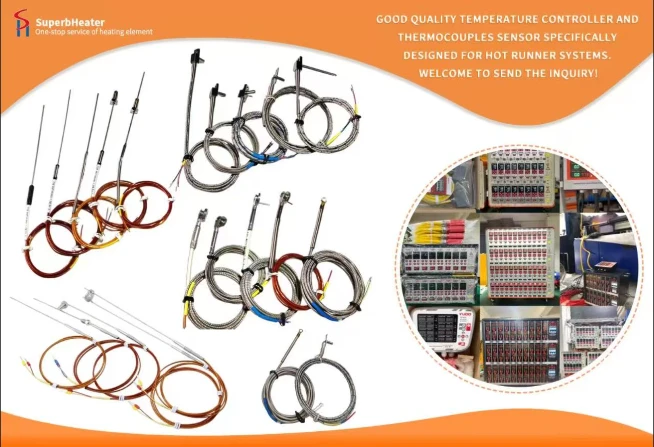

 English
- English
- Français
- Deutsch
- 日本語
- Italiano
- Español
- Português
- русский
- Indonesia
- عربي
- Ελληνικά
- Polski
- فارسی
- עברית
- Kreyòl Ayisyen
- 한국어
- Türkçe
- slovenčina
- Bai Miaowen
- Cymraeg
- dansk
- Lietuvių
- Malti
- Svenska
- Srbija jezik (latinica)
- O'zbek
- ไทย
- suomi
- magyar
- Eesti
- Català
- slovenščina
- Melayu
- Български
- اردو
- România limbi
- bosanski
- हिंदी
- Gaeilgenah Éireann
- Việt Nam
- বাংলা
- íslenska
- Norsk
- Latviešu
- hrvatski
- Nederlands
- Čeština
- українська


