Resin degradation is a serious problem that can lead to poor part quality, material waste, and damage to the hot runner. Thermocouples can detect degradation through several indirect indicators. The first sign of degradation is a change in the required heater power. As the resin degrades, it may become more viscous, requiring more heat to flow. Or it may carbonize and build up on the heater, causing inefficient heat transfer. A gradual increase in power percentage (without a change in setpoint) suggests degradation. The second sign is an unstable temperature. Degraded resin can form "coke" (carbonized deposits) on the nozzle or manifold wall. This coke acts as a thermal insulator, causing the temperature to fluctuate. The thermocouple reading will become noisy or erratic. The third sign is a change in the gate freeze time. Degraded resin may have a different cooling behavior. If the gate freeze time (detected by the thermocouple, as in Article 129) changes significantly, it may indicate that the resin is degrading. The fourth sign is a change in the pressure profile of the machine. A degradation-related viscosity increase will require higher injection pressure, which can be detected by the machine's pressure sensor. The thermocouple data, when correlated with the pressure data, confirms the degradation. The fifth step is to analyze the temperature profile during startup. If the temperature response is slower than normal (e.g., it takes longer to reach the setpoint), it may indicate that the heater is covered in carbonized resin, reducing its efficiency. The sixth step is to check for "acidic" gases. Some resins (like PVC) release acidic gases when they degrade. These gases can corrode the thermocouple sheath. If the insulation resistance of the thermocouple is dropping, it may indicate corrosion due to degradation gases. The seventh step is to perform a "visual inspection." While not a thermocouple function, the data can prompt this. If the thermocouple data suggests degradation, the engineer should inspect the nozzle and manifold for carbon buildup. The eighth step is to use a "thermal signature" comparison. Compare the current thermocouple data with the baseline (when the resin was fresh). A change in the signature (e.g., a higher steady-state temperature, a slower response) indicates degradation. By using thermocouple data to detect resin degradation early, molders can take corrective action-such as reducing the temperature, cleaning the hot runner, or replacing the resin-before the degradation causes part defects or damages the hot runner. This proactive approach extends the life of the hot runner and reduces material waste.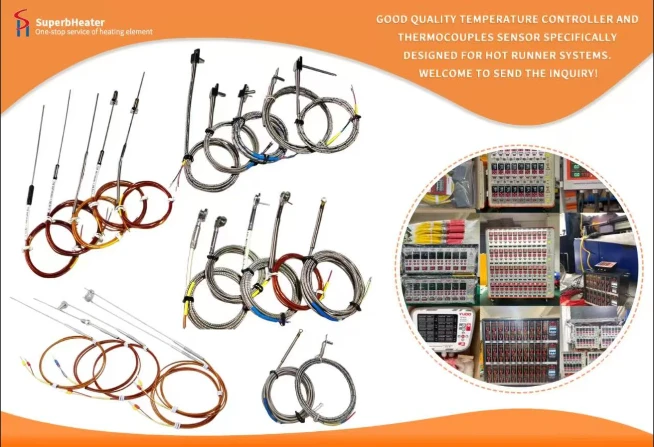

 English
- English
- Français
- Deutsch
- 日本語
- Italiano
- Español
- Português
- русский
- Indonesia
- عربي
- Ελληνικά
- Polski
- فارسی
- עברית
- Kreyòl Ayisyen
- 한국어
- Türkçe
- slovenčina
- Bai Miaowen
- Cymraeg
- dansk
- Lietuvių
- Malti
- Svenska
- Srbija jezik (latinica)
- O'zbek
- ไทย
- suomi
- magyar
- Eesti
- Català
- slovenščina
- Melayu
- Български
- اردو
- România limbi
- bosanski
- हिंदी
- Gaeilgenah Éireann
- Việt Nam
- বাংলা
- íslenska
- Norsk
- Latviešu
- hrvatski
- Nederlands
- Čeština
- українська


