Recycled resins, particularly post-consumer recycled (PCR) materials, present unique challenges for hot runner thermocouples due to their variable composition, contaminants, and degradation behavior. The first challenge is the presence of contaminants. Recycled resins may contain trace metals, paper, or other plastics that can burn or carbonize at processing temperatures, creating deposits on the thermocouple probe. These deposits insulate the probe, causing slow response and drift. The solution is to use thermocouples with a non-stick coating (e.g., a thin Teflon or ceramic coating) to reduce adhesion. The second challenge is the variable melt temperature. Recycled resins often have a broader molecular weight distribution, which can cause the viscosity to vary more with temperature. The thermocouple must be highly accurate (Class 1) to detect these variations and allow the controller to adjust the temperature accordingly. The third challenge is the higher degradation rate. Recycled resins have already been processed once, so they are more prone to degradation at elevated temperatures. The thermocouple must respond rapidly to prevent overheating, as even a brief excursion above the setpoint can cause a quality issue. The fourth challenge is the chemical aggressiveness. Recycled materials may contain additives from their previous life, such as flame retardants or plasticizers, which can release corrosive gases. The thermocouple sheath must be corrosion-resistant; Inconel 600 is recommended over stainless steel. The fifth challenge is the presence of moisture. Recycled resins are often more hygroscopic, and the moisture can turn to steam at high temperatures. This can cause pressure fluctuations that stress the thermocouple. A robust spring-loaded design is necessary to maintain contact. The sixth challenge is the need for more frequent calibration. Due to the variable nature of recycled materials, thermocouples should be calibrated more frequently-perhaps every 3 months-to ensure they are reading accurately. The seventh challenge is the economic pressure. Recycled materials are used to reduce costs, so there is pressure to use lower-cost thermocouples. However, this is a false economy. A thermocouple failure on a line running recycled material can cause even more scrap due to the variability of the material. Investing in higher-quality thermocouples is justified. The eighth challenge is the validation. When switching to a new batch of recycled material, the process engineer should use the thermocouple data to verify that the temperature profile is consistent with the previous batch. By understanding these special needs and selecting thermocouples accordingly, molders can successfully process recycled resins, achieving both cost savings and sustainability goals while maintaining part quality.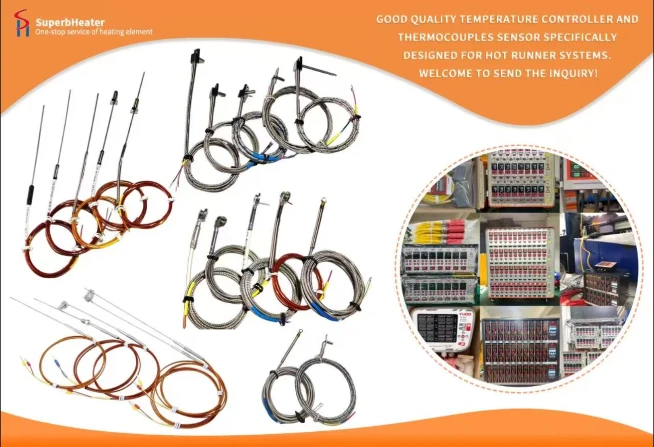

 English
- English
- Français
- Deutsch
- 日本語
- Italiano
- Español
- Português
- русский
- Indonesia
- عربي
- Ελληνικά
- Polski
- فارسی
- עברית
- Kreyòl Ayisyen
- 한국어
- Türkçe
- slovenčina
- Bai Miaowen
- Cymraeg
- dansk
- Lietuvių
- Malti
- Svenska
- Srbija jezik (latinica)
- O'zbek
- ไทย
- suomi
- magyar
- Eesti
- Català
- slovenščina
- Melayu
- Български
- اردو
- România limbi
- bosanski
- हिंदी
- Gaeilgenah Éireann
- Việt Nam
- বাংলা
- íslenska
- Norsk
- Latviešu
- hrvatski
- Nederlands
- Čeština
- українська


