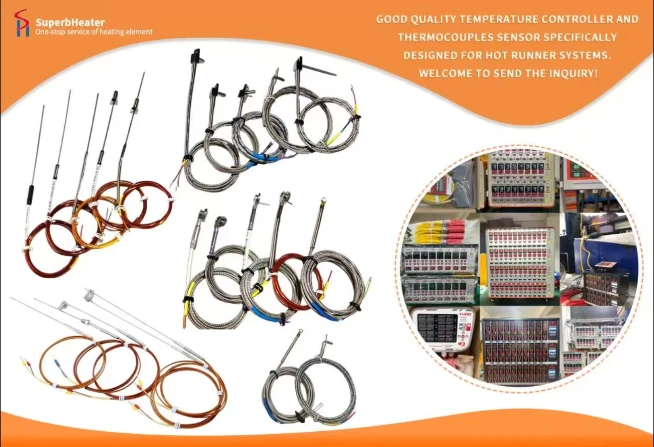
Reverse connection of thermocouple positive and negative wires triggers a TC REVERSE alarm and causes the measured temperature reading to be far lower than the actual flow channel temperature. The controller responds by continuously increasing heating power, leading to slow overheating of the manifold and serious product defects.
The Polarity Principle. Thermocouples generate a DC voltage with a specific polarity. For Type K, the positive lead is chromel (yellow/red), and the negative lead is alumel (black). For Type J, the positive lead is iron (white), and the negative is constantan (red). When these are connected to the opposite terminals on the controller, the voltage polarity reverses.
The Controller's Misinterpretation. A reversed voltage is interpreted by the controller as a negative temperature or a temperature far below actual. For example, if the actual temperature is 280°C, a reversed connection might show 50°C or even a negative value. The controller, believing the zone is cold, applies maximum power to the heater.
The Overheating Cascade. As the controller applies more power, the actual temperature rises further. But because the polarity is reversed, the displayed temperature does not increase correspondingly-it may even decrease. The controller continues adding power, creating a dangerous overheating condition. The manifold temperature can slowly climb well beyond safe limits without any alarm.
Production Defects. Thin-wall products show serious flow marks and incomplete filling. The melt degrades from excessive heat, causing burn marks, splay, and carbon spots. In extreme cases, the plastic can ignite or the manifold can be permanently damaged by thermal stress.
The Fix. The solution is straightforward. Distinguish wire polarity according to international standard color codes. Rewire the terminals in the correct order. After correction, verify that the temperature reading increases when the zone is heated and decreases when cooled. Always double-check polarity during installation and after any maintenance that involves disconnecting wires.
Prevention through Standardization. Use color-coded connectors and cables. Mark positive and negative terminals clearly on junction boxes. Provide polarity verification as a standard step in all thermocouple installation procedures. Train maintenance staff to recognize polarity markings.
---