I. Core Communication Interface Hardware
Industrial Communication Gateway: Supports Modbus/PROFINET protocol conversion, adapts to the digital interfaces of mainstream hot runner temperature controllers such as Husky, and enables bidirectional transmission of RC parameter data.
Industrial-grade PTP Synchronous Switch: Such as Mosaic EDS-G308-2SFP or Advantech EKI-7712G-4F models, ensuring the timestamp synchronization accuracy between the temperature controller and the MES system is ≤1ms, avoiding task triggering time deviations.
Industrial Network Interface Card (NIC): Supports hardware timestamp functionality, installed on the MES server, improving the real-time performance and accuracy of RC parameter data acquisition.
II. Field Signal Acquisition Hardware
High-Precision RC Parameter Acquisition Module: Acquires resistance and capacitance data of the temperature controller's RC network in real time, with an accuracy class ≥0.5 and a deviation ≤0.1%.
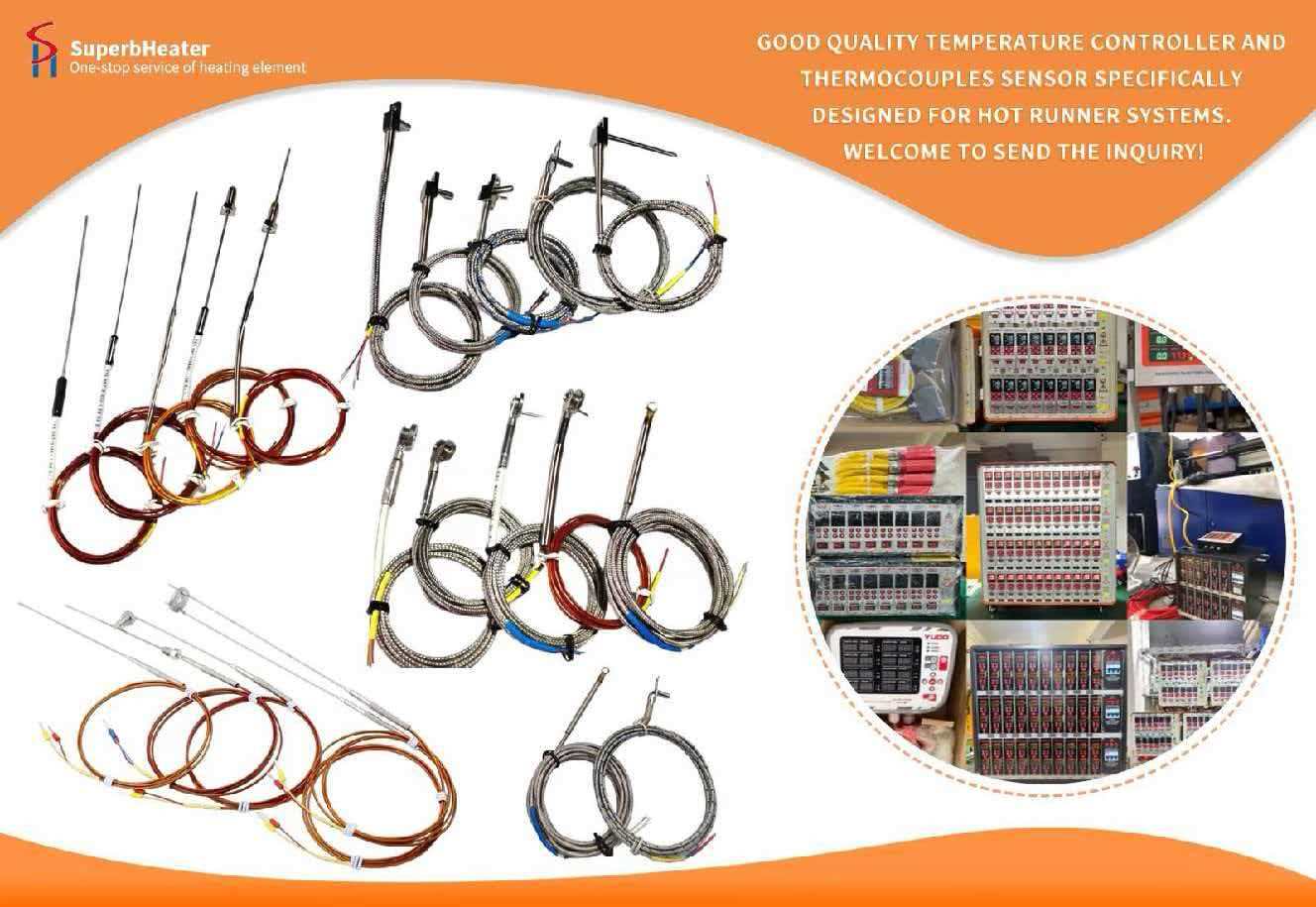
Temperature Fluctuation Monitoring Sensor: Equipped with a K-type high-precision thermocouple probe, uploads temperature fluctuation data from various points in the hot runner to the MES system in real time.
Electromagnetic Environment Monitoring Module: Real-time acquisition of interference frequency and intensity data in the workshop, serving as the basis for determining the operating conditions that trigger RC calibration tasks.
III. Auxiliary Hardware
Industrial-grade Wireless Wi-Fi Module: A high-performance, cost-effective domestic model, suitable for high-temperature workshop environments, enabling wireless transmission of collected data on-site.
Signal Isolator: Provides electromagnetic isolation for temperature measurement lines and communication lines, preventing data corruption and packet loss caused by strong interference.
Maintenance Terminal: An industrial-grade handheld PAD used to receive RC calibration tasks automatically dispatched by the MES system and upload calibration results data on-site.
IV. Hardware Selection and Compatibility Tips
Prioritize industrial-grade components from brands such as Phoenix Contact and Siemens that you have previously considered to ensure long-term operational stability.
In high-temperature injection molding workshop scenarios, the operating temperature range of all hardware must cover -10℃ to 60℃ to avoid hardware failure under high-temperature conditions.