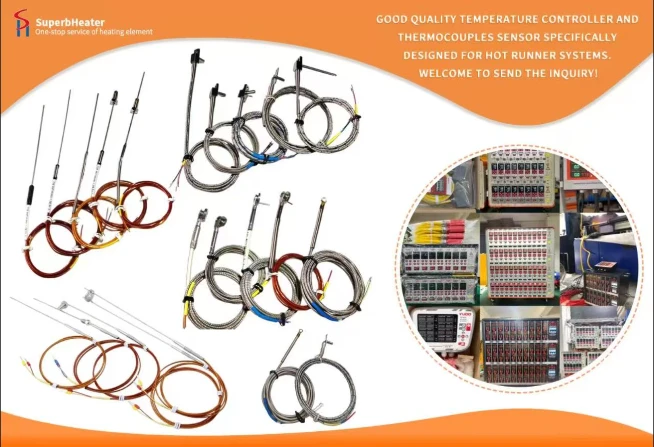
Longer isn't always better when it comes to thermocouple cables. In fact, longer cables can introduce measurement errors and are more susceptible to damage. Sometimes, a shorter cable is the better choice.
Signal Degradation
The thermocouple signal is a small DC voltage-microvolts per degree. Long cable runs increase the resistance of the circuit. While the resistance itself doesn't affect the voltage, it does make the signal more susceptible to electrical noise. A long cable acts as an antenna, picking up interference from heaters, motors, and other equipment.
Damage Risk
A longer cable has more length to be pinched, cut, or abraded. More exposure means more risk. Shorter cables are easier to route and protect. If the cable is long, it's more likely to contact moving parts or hot surfaces. Shorter is often more reliable.
The Connector Location Effect
If the connector is mounted on the mold, the cable from the sensor to the connector is relatively short. This is a good arrangement. If the cable from the mold to the controller is long, use an extension cable that's properly shielded. The extension cable is more likely to be damaged than the sensor cable, but it's easier to replace.
Cost Differences
Longer thermocouple cables cost more. The cost increase is small, but across many zones, it adds up. Shorter sensors are also easier to store and manage. For the same sensor type, choose the shortest cable that provides adequate reach.
When Longer Is Necessary
Longer cables are necessary when the connector is mounted remotely from the mold, or when the mold is large and the cable needs to run a significant distance. The key is to ensure proper strain relief and protection along that longer run. A long cable that's properly supported and routed in a protective conduit is fine.
The Ideal Length
The ideal cable length is the shortest length that can be routed safely from the sensor to the connector without tension or excessive bends. Leave a small service loop for strain relief. Any extra cable invites problems. It's tempting to order longer "just in case," but the extra length often becomes a source of issues.