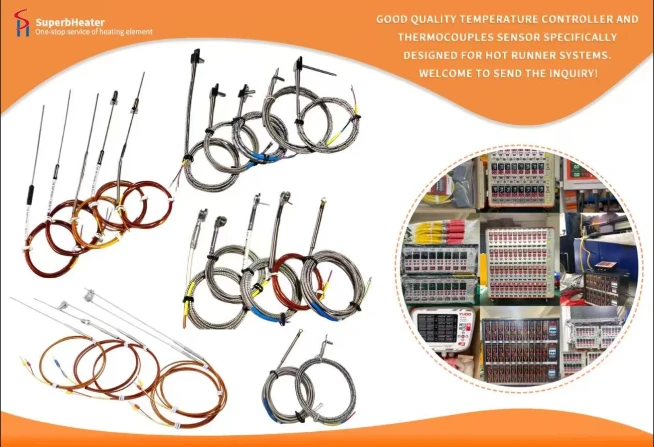
Older molds and controllers often have thermocouple configurations that don't match modern standards. Connectors are different, sensor types are different, and documentation is often missing. Working with legacy equipment requires practical strategies.
Identify What You Have
The first step is identifying the existing thermocouple type and configuration. Type J or K? What diameter? What connector type? If you can't find documentation, remove a sensor and examine it. Look for markings on the cable. Measure the connector pin arrangement. This detective work is time-consuming but essential.
The Compatibility Challenge
Legacy controllers may not accept modern thermocouple types. If the controller is configured for Type K, you can't use Type J without adapting the controller. Some older controllers require specific thermocouple types and can't be changed. You may need to keep compatible sensors in stock.
Adaptor Cables
If the connector type doesn't match, you can use adaptor cables. These adapt the old connector to a new connector. They're available from thermocouple suppliers. Using adaptors is cost-effective for legacy equipment, but they add another potential failure point.
Replacement of Legacy Sensors
When a legacy thermocouple fails, you often can't get an exact replacement. You may need to retrofit the mold to accept a modern sensor. This might require drilling a new hole, adapting the mounting, or changing the connector. It's more work than a simple replacement but often necessary.
Documentation After the Fact
Once you've identified what's on a legacy mold, document it. Create a simple record: mold number, zone number, thermocouple type, connector type, and any special considerations. This record saves time the next time a replacement is needed. Don't rely on memory.
The Retrofit Decision
At some point, it may be more cost-effective to retrofit the mold with a modern thermocouple system rather than continuing with legacy sensors. The retrofit cost is a one-time expense; the ongoing savings in maintenance and downtime may justify it. Consider the long-term economics.
Spare Stock for Legacy Sensors
If you have many legacy molds with thermocouple configurations that are becoming obsolete, consider stocking spares. Once a sensor type is discontinued, you won't be able to get replacements. Having a stockpile buys you time to plan for retrofits. This is a practical way to manage the transition.