Upgrading the temperature control of an existing hot runner system by replacing or adding new thermocouple technology can yield significant improvements in stability, accuracy, and efficiency. However, an upgrade must be carefully planned to ensure compatibility and to maximize benefits. The first upgrade option is to replace older, slower thermocouples with fast-response versions. If the current sensors are 1.5mm diameter ungrounded type, upgrading to 1.0mm grounded type can cut response time by half, allowing the controller to react faster and reduce temperature overshoot. Before upgrading, check that the controller can support the faster response (most can, but may need PID re-tuning). The second upgrade is to add "smart" features by using thermocouples with built-in memory. These store calibration offsets and serial numbers. When connected to a compatible controller, the controller automatically applies the offsets, eliminating the need for manual offset entry. This is particularly beneficial if you have many molds with interchangeable thermocouples. The third upgrade is to implement a redundant sensor scheme. In critical applications, add a second thermocouple in each zone. The controller can switch to the backup if the primary fails, or it can alert if the two deviate, indicating a problem. This requires additional hardware but significantly improves reliability. The fourth upgrade is to use thermocouples with more robust materials, such as Inconel sheaths or special high-temperature cables, to extend service life in aggressive environments. The fifth upgrade involves the wiring infrastructure-replacing old, unshielded cables with shielded twisted-pair cables and proper grounding to reduce EMI. This often yields an immediate improvement in signal stability. The sixth upgrade is to integrate the thermocouple data with a plant-wide monitoring system, as discussed earlier. This adds the ability to log and analyze data for predictive maintenance. When planning an upgrade, start with a pilot zone to test the new technology and adjust the PID parameters. After successful testing, roll out to the entire system. The cost of upgrading is typically recovered within 6-12 months through reduced scrap and downtime. It is advisable to document the upgrade, including the new sensor specifications, wiring diagrams, and PID settings, to ensure that maintenance teams can support the new system. By embracing thermocouple technology upgrades, molders can breathe new life into older hot runner systems, achieving performance comparable to new equipment at a fraction of the cost.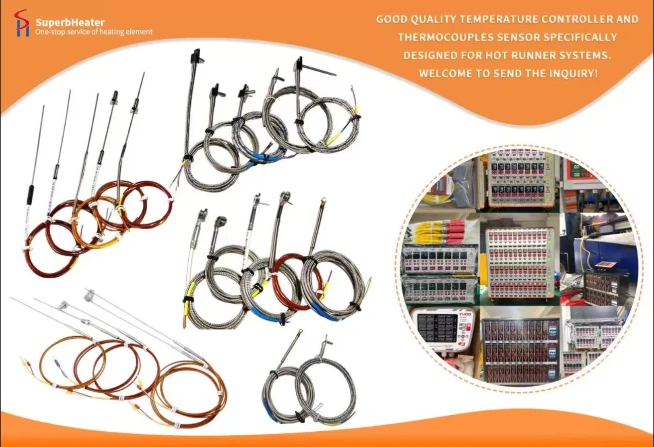

 English
- English
- Français
- Deutsch
- 日本語
- Italiano
- Español
- Português
- русский
- Indonesia
- عربي
- Ελληνικά
- Polski
- فارسی
- עברית
- Kreyòl Ayisyen
- 한국어
- Türkçe
- slovenčina
- Bai Miaowen
- Cymraeg
- dansk
- Lietuvių
- Malti
- Svenska
- Srbija jezik (latinica)
- O'zbek
- ไทย
- suomi
- magyar
- Eesti
- Català
- slovenščina
- Melayu
- Български
- اردو
- România limbi
- bosanski
- हिंदी
- Gaeilgenah Éireann
- Việt Nam
- বাংলা
- íslenska
- Norsk
- Latviešu
- hrvatski
- Nederlands
- Čeština
- українська


